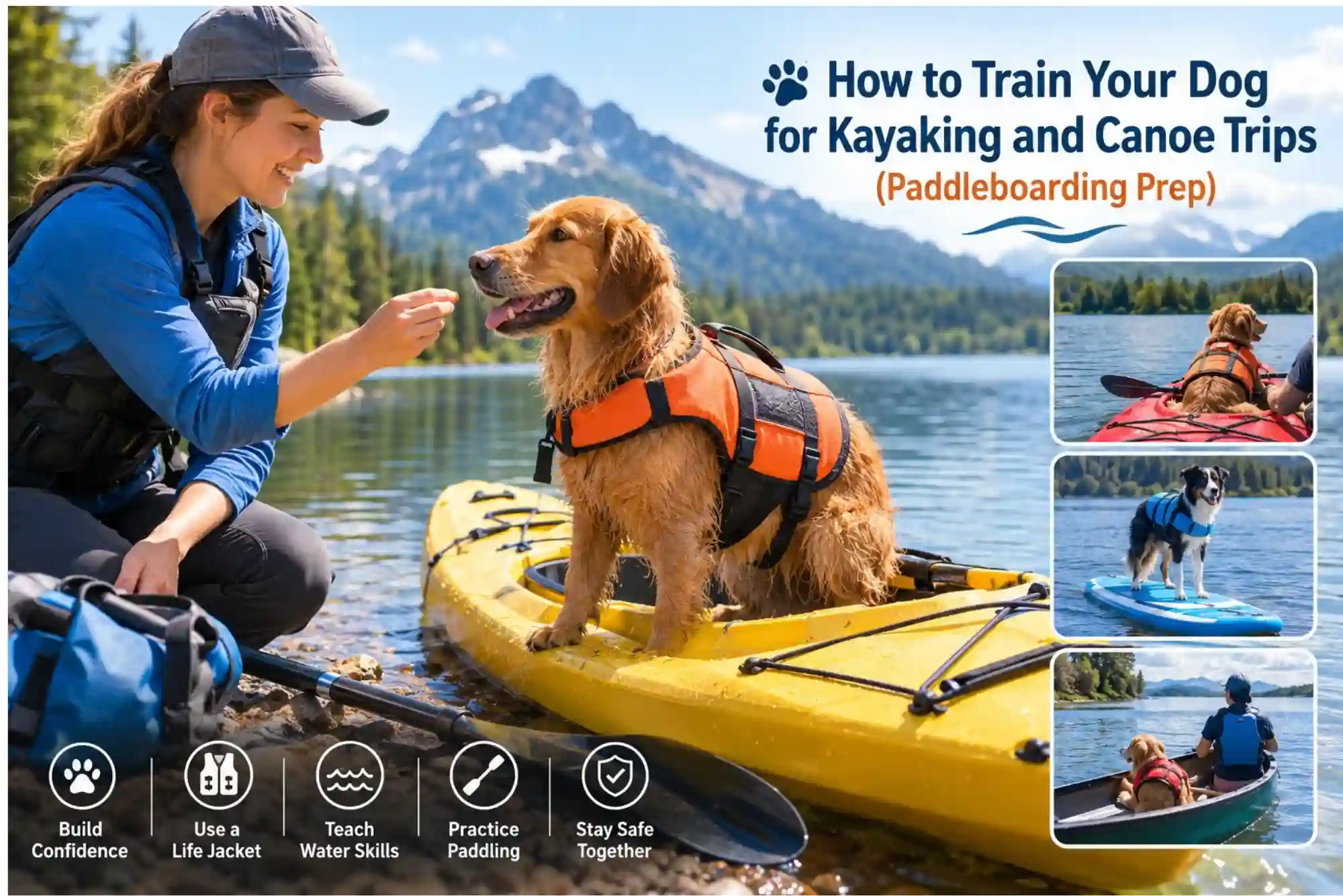
Taking your dog kayaking, canoeing, or paddleboarding can turn an ordinary outdoor adventure into a memorable experience you can share together. Dogs can enjoy being on the water, exploring new surroundings, and spending time with their owners, but a successful trip does not happen simply by putting a dog into a kayak and paddling away.
Your dog needs time to become comfortable with the boat, board, movement, paddle, water, life jacket, and changing surroundings. Proper preparation is especially important because a kayak or paddleboard can move underneath a dog, while unexpected sounds, wildlife, waves, or other people can cause excitement or fear.
The safest approach is gradual training. Start on dry land, build confidence around the equipment, teach useful commands, introduce the life jacket before the first water session, and only progress to calm, shallow water when your dog is comfortable. The American Kennel Club similarly recommends introducing the kayak on land and gradually teaching the dog to remain calm and settled before moving onto the water.
This guide explains how to prepare your dog for kayaking and canoe trips while also covering paddleboarding preparation, water confidence, equipment, training commands, and practical safety considerations.
Understanding Whether Your Dog Is Ready for Water Adventures
Not every dog will immediately enjoy kayaking or paddleboarding. A dog may love swimming but dislike a moving kayak. Another dog may enjoy sitting in a canoe but become nervous when the paddle moves overhead. Your dog’s individual temperament, physical condition, swimming ability, and comfort with unfamiliar environments all matter.
A good starting point is observing your dog’s behavior around water. If your dog is already comfortable walking near a lake or calmly entering shallow water, you have a useful foundation. However, swimming ability should not be confused with boat safety. Even dogs that swim well can become tired, frightened, or disoriented.

The American Animal Hospital Association notes that swimming ability varies between individual dogs and that some body types can make swimming more difficult. Dogs should therefore be supervised around water regardless of their previous experience.
If your dog becomes extremely anxious around water, struggles with physical activity, or has a medical or mobility concern, speak with a veterinarian before planning a demanding water outing.
Start Training on Dry Land
The most important part of preparing your dog for kayaking is often the work you do before reaching the water.
A kayak or paddleboard can feel strange under a dog’s paws. It may slide slightly, wobble, or make unfamiliar noises. Introducing it on land gives your dog the opportunity to investigate it without simultaneously dealing with water movement.
Place the kayak, canoe, or paddleboard in a quiet area where your dog normally feels comfortable. Allow your dog to approach it voluntarily. Sniffing the equipment, looking at it, or walking near it can all be treated as positive interactions.
Do not immediately force your dog onto the boat. Instead, reward calm curiosity. Once your dog becomes comfortable near the equipment, encourage them to place two paws on it. Later, you can encourage all four paws onto the surface.
Positive reinforcement is particularly useful because the goal is to create a pleasant association with the equipment. The dog should learn that being near the kayak or board predicts calm experiences, praise, play, or appropriate treats.
The AKC recommends this gradual process, including rewarding the dog for showing interest in the boat and progressively encouraging more interaction.
Teach Your Dog to Get On and Off Safely
One of the most useful skills for a dog participating in kayaking or canoeing is learning when to get onto the boat and when to get off.
Choose simple verbal cues such as “up,” “on,” “off,” or another consistent command. The specific words matter less than consistency.
Practice on dry land until your dog understands that the boat is a designated place. Ask your dog to approach, wait, get on, settle down, and get off when invited.
This is especially important because dogs can become excited when they see birds, other animals, people, or something interesting along the shoreline. A dog that jumps unexpectedly can affect the stability of a small craft.
The goal is not to make your dog completely motionless. Instead, your dog should understand that the boat is a place where calm behavior is expected.
Build Basic Obedience Before Going on the Water
Before attempting a kayak, canoe, or paddleboard trip, your dog should have a reliable foundation of basic obedience.
Useful commands include sit, down, stay, come, leave it, and a release or “okay” cue. These commands become particularly valuable when your dog encounters distractions.
For example, imagine that a duck swims near your kayak. A dog with a strong “stay” or “leave it” response is easier to manage than a dog that immediately tries to chase the bird.
Recall is also important. Although your dog should not be allowed to roam freely around dangerous water conditions, a reliable recall can be useful if your dog accidentally enters shallow water or becomes separated from you.
Practice these commands in different environments before combining them with kayaking. Start in a quiet room, then a yard, then gradually introduce more distractions.
Introduce the Life Jacket Before the Trip
A properly fitted canine life jacket is an important part of water preparation. Even a dog that is an excellent swimmer can become tired or disoriented in an unexpected situation.
The life jacket should be introduced before the first kayaking or paddleboarding trip. Do not wait until you arrive at the lake and expect your dog to immediately accept unfamiliar equipment.
Let your dog see and smell the life jacket. Reward calm behavior around it. Gradually put it on your dog for short periods while remaining in a comfortable environment.
Once your dog is comfortable wearing it indoors, practice walking around while wearing it. You can also incorporate normal activities and rewards so the jacket becomes an ordinary piece of equipment rather than something associated with stress.
The jacket should fit securely while allowing your dog to move naturally. The AKC recommends checking fit carefully and choosing a design that does not unnecessarily restrict shoulder and leg movement.
A strong rescue handle can also be useful because it gives the owner a practical way to assist the dog if necessary.
Practice Swimming With the Life Jacket
Wearing a life jacket on land is different from swimming in one.
If your dog will be swimming during the trip, introduce the jacket in controlled water conditions before the main adventure. Choose calm, shallow water where your dog can enter and exit easily.
Allow your dog to become comfortable at their own pace. Avoid forcing a nervous dog into deeper water.
The objective is to teach your dog that the life jacket supports them while they move normally. Watch the dog’s body language carefully. If your dog becomes frightened or overwhelmed, return to an easier stage.
Water introduction should remain positive and gradual. A calm first experience is more valuable than trying to make rapid progress.
Help Your Dog Develop Balance and Body Awareness
Kayaks, canoes, and paddleboards are not completely stable surfaces. Your dog needs to adjust their body as the craft moves.
You can build confidence with appropriate balance exercises on land. A stable platform can be used first, followed by carefully introduced unstable surfaces if your dog is comfortable.
The goal is not to make training difficult. Instead, you want your dog to learn that small movements under their paws are not automatically a reason to panic.
Practice simple behaviors such as standing, sitting, lying down, and staying in position.
If your dog appears uncomfortable on an unstable surface, return to a stable surface. Training should build confidence rather than overwhelm your dog.
Introduce the Paddle Separately
The paddle itself can be one of the strangest parts of the experience for a dog.
A paddle moves above and around the dog and can create sounds and shadows. A dog that has never seen paddling before may react by trying to follow or grab it.
Introduce the paddle while your dog is still on land.
Let your dog observe it while you hold it. Move it slowly at first. Reward calm behavior. Gradually imitate the motions you will make while kayaking.
You can then practice while your dog is sitting or lying on the kayak or board. Continue rewarding calm behavior as you move the paddle.
The purpose is to make paddling boring and predictable.
Your dog does not need to understand what the paddle does. They simply need to learn that paddle movement is normal and does not require a reaction.
Teach a Reliable “Place” Behavior
A designated position can make kayaking much easier.
Choose the safest area of the kayak, canoe, or paddleboard for your dog and teach them that this is their place. Depending on the craft and dog’s size, this may be a specific section where they can lie down without interfering with your paddling.
Begin by rewarding your dog for entering the area. Then reward sitting or lying down there.
Gradually increase the amount of time your dog remains in that position.
The “place” behavior becomes especially useful when you begin paddling. Instead of constantly correcting your dog, you can use a familiar cue to guide them back to their designated position.
Prepare Your Dog for Movement
Once your dog is comfortable sitting on the stationary kayak or paddleboard, introduce movement gradually.
On land, you can gently move or rock the equipment while your dog remains nearby or on it, provided the setup is safe and controlled.
Reward your dog for staying relaxed.
The American Kennel Club recommends developing confidence with movement before taking a dog onto the water. Teaching the dog to remain calm while the equipment moves helps prepare them for the natural instability of kayaking.
Never intentionally create large or sudden movements simply to test your dog. The objective is controlled exposure, not surprise.
Move to Shallow Water
Once your dog is comfortable on the equipment, wearing the life jacket, responding to basic commands, and remaining calm around paddle movements, you can begin introducing water.
Choose a calm location with easy access to shore.
Avoid strong currents, large waves, crowded waterways, or areas with heavy boat traffic for the first session.
Keep the first session short. Your dog may need time to process the combination of water, movement, equipment, sounds, and new surroundings.
Have another responsible person nearby if possible. They can help stabilize the craft while you get situated.
Your first goal should not be distance. Your first goal should be calm behavior.
Keep the First Kayak Trip Short
A common mistake is planning a long adventure immediately after the dog successfully enters the kayak.
The first trip should instead be treated as a training session.
Stay close to shore and spend a short amount of time on the water. Observe how your dog reacts to movement, paddle strokes, sounds, wildlife, and other boats.
If your dog remains relaxed, you can gradually increase the duration on future outings.
If your dog becomes nervous, restless, or overwhelmed, return to shore and repeat an easier training stage another day.
A successful short trip is better preparation than a long trip that creates fear.
Canoeing With Your Dog
Canoes often provide more open space than some kayaks, but the larger area does not eliminate the need for training.
Your dog may have more room to move, which can actually create another challenge if they walk around unnecessarily.
Teach your dog to remain in a specific location and to respond to your cues.
Before launching, make sure the canoe is appropriate for the combined weight of the passengers, dog, equipment, and supplies.
Canoe stability also depends on how weight is distributed. Your dog should not be encouraged to move suddenly from one end of the canoe to the other.
The same land-training principles apply: equipment introduction, life-jacket conditioning, obedience, paddle desensitization, and gradual water exposure.
Preparing Your Dog for Paddleboarding
Paddleboarding requires additional balance because both you and your dog are sharing a relatively narrow floating platform.
A wide, stable board is generally easier for beginners and provides more room for the dog. The dog should have a comfortable area with sufficient traction so their paws do not slide easily.
Begin by placing the paddleboard on dry land. Let your dog investigate it and practice getting on and off.
Then introduce your own movements. Sit on the board, stand on it, shift your weight gently, and practice while your dog remains calm.
The AKC recommends teaching dogs basic commands such as sit, down, come, and stay before paddleboarding, and recommends introducing the board gradually on land before moving into shallow water.
Once the dog is comfortable, move to shallow water and keep the board close to shore.
Teach Your Dog How to Stay on the Board
For paddleboarding, a reliable “down” behavior can be particularly useful.
A dog standing continuously can make the board less stable, especially if the dog is large or frequently changes position.
Reward your dog for lying down calmly in the designated area.
Do not repeatedly push the dog into position. Instead, teach the behavior through positive reinforcement so the dog chooses to settle.
You should also practice getting back onto the board from shallow water if your dog is physically able to do so. The objective is to make this situation familiar rather than surprising.
Never Attach Your Dog Directly to the Boat
One important safety point is that your dog should not be tethered directly to a kayak, canoe, or paddleboard.
If the craft capsizes or the dog enters the water unexpectedly, a tether can create an additional hazard.
The AKC specifically advises against tethering a dog directly to the boat or watercraft because of the potential danger if the craft overturns.
Instead, focus on training, supervision, appropriate flotation equipment, and reliable handling.
Protect Your Dog From Heat and Dehydration
Water activities can look refreshing, but dogs can still become overheated while spending time outdoors.
Open water may provide little shade, and reflective surfaces can increase sun exposure.
Bring enough fresh drinking water for the entire outing. Do not assume that lake, river, or seawater is appropriate drinking water.
Plan demanding sessions around comfortable weather conditions and provide opportunities for your dog to rest.
Watch for signs that your dog is becoming tired or overheated, and end the outing if necessary.
Pay Attention to Water Conditions
Before launching, check the conditions of the water and the environment.
A calm lake is very different from a river with a strong current or an exposed coastal area with waves.
Beginners should choose conditions appropriate for their skill level and their dog’s experience.
Also consider wildlife, boat traffic, weather changes, water temperature, and local regulations.
Some locations may have restrictions concerning dogs, paddleboards, boats, or specific access areas. Check the rules before arriving.
Build Confidence Instead of Forcing Participation
Every dog learns at a different pace.
One dog may happily climb into a kayak after several sessions, while another may require much more time.
If your dog refuses to approach the kayak, tries to escape the equipment, trembles, or repeatedly shows signs of distress, do not force the experience.
Return to a previous stage where your dog was comfortable.
Training works best when the dog gradually learns that the equipment, water, and movement are safe and predictable.
Your goal should be confidence, not simply getting the dog into the boat.
What to Pack for a Dog Kayaking Trip
A successful outing requires more than a kayak and paddle.
Bring your dog’s properly fitted life jacket, fresh drinking water, a suitable water container, treats, towels, basic first-aid supplies, and any necessary medications or normal care items.
It is also useful to have a dry towel and a safe place for your dog to rest after the activity.
If your dog becomes wet, cold, tired, or uncomfortable, you should be prepared to end the trip rather than continue simply because you planned a particular distance.
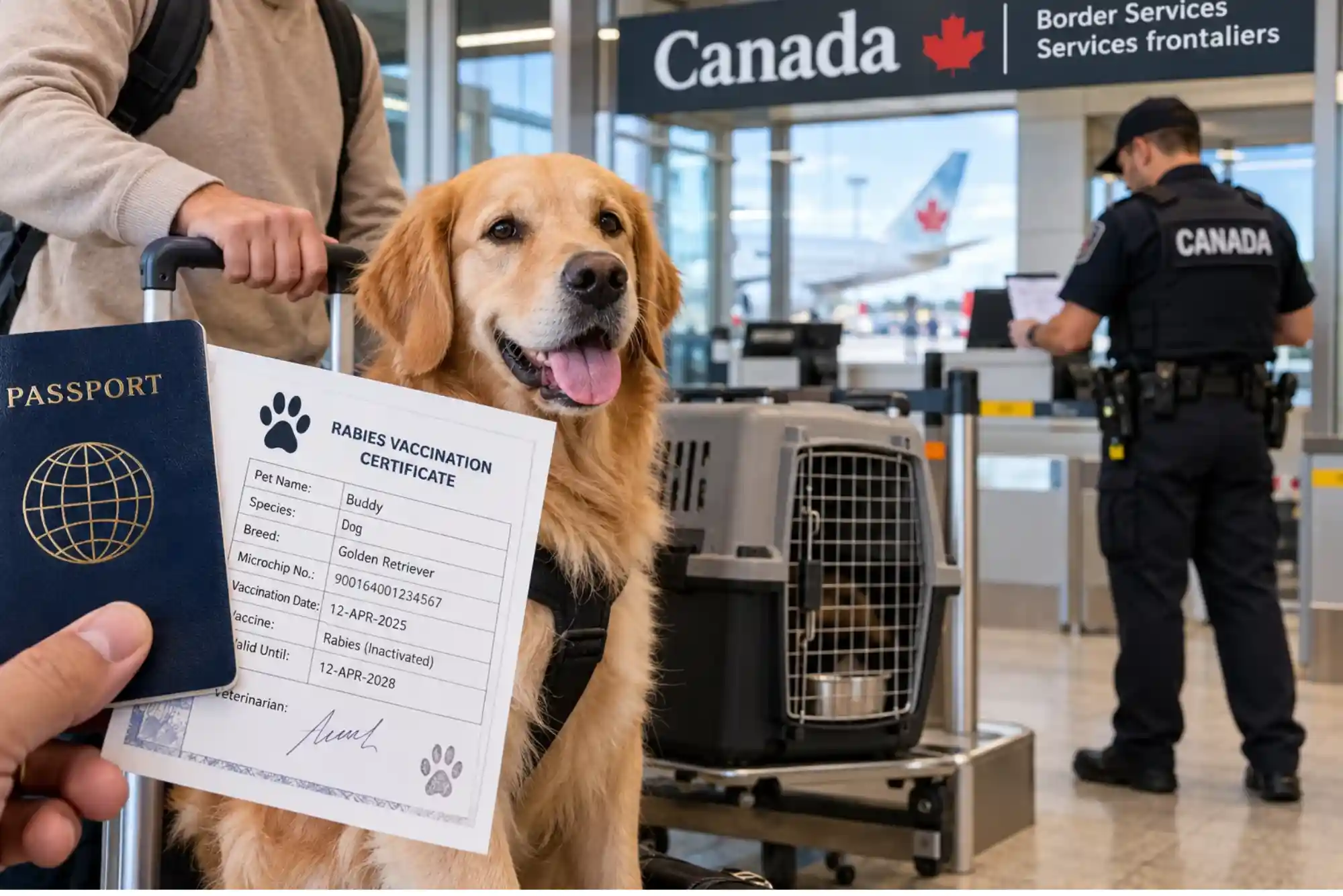
For owners planning longer outdoor adventures or traveling to another destination with a pet, understanding broader pet-travel requirements can also be useful. You can learn more through [International Pet Travel].
Combining Kayaking With Pet Travel
A kayaking trip may be part of a larger vacation. If you are driving to another region or traveling internationally with your dog, preparation should begin well before the day of the adventure.
Travel can introduce additional stressors, including unfamiliar vehicles, accommodations, new environments, and changes in routine.
Keeping your dog’s normal routine as consistent as possible can help.
For broader pet-travel planning, [TripMatchUp] provides a starting point for exploring pet-related travel information.
When planning an outdoor trip, consider the entire journey rather than focusing only on the kayaking activity.
How Long Does Dog Kayak Training Take?
There is no universal training timeline.
Some dogs may become comfortable with the kayak after several short sessions, while others may need weeks of gradual practice.
Age, temperament, previous water experience, obedience training, physical ability, and the type of equipment can all affect the process.
Rather than setting a fixed deadline, look for specific signs of readiness.
Your dog should willingly approach the equipment, comfortably wear the life jacket, respond to basic cues, remain calm around paddle movement, and tolerate gentle movement of the craft.
Your dog should also demonstrate appropriate behavior around water and distractions before you move farther from shore.
Signs Your Dog Is Ready for a Longer Trip
A dog that is ready for a longer outing should be able to remain settled for an appropriate period, respond to your cues, and recover quickly from normal environmental distractions.
The dog should not constantly attempt to jump out, scramble around, or escape the equipment.
You should also be comfortable controlling the craft yourself.
Remember that your own paddling ability matters too. If you are inexperienced with kayaking, combining a nervous dog with difficult water conditions can make the situation much harder.
Build your own skills separately and introduce your dog when you can confidently manage the craft.
Making the Experience Positive
The best dog kayaking trips are not necessarily the longest ones.
A calm paddle near shore can be more valuable than an ambitious journey that leaves your dog frightened or exhausted.
Use rewards strategically. Praise calm behavior, reinforce the desired position, and give your dog breaks.
Keep your communication calm and consistent.
Over time, the dog should begin to understand the routine: life jacket, equipment, boarding, settling, paddling, water, and returning to shore.
That predictability can make future outings easier.
Final Thoughts
Training a dog for kayaking, canoeing, or paddleboarding is a gradual process that combines obedience, confidence, balance, water familiarity, and safety preparation.
Start on dry land and allow your dog to investigate the equipment without pressure. Teach reliable commands and a designated position. Introduce the life jacket well before the first trip, then practice wearing it and swimming in controlled conditions.
Introduce paddle movement gradually and move to shallow, calm water only after your dog is comfortable with the earlier stages. Keep initial outings short, stay close to shore, monitor weather and water conditions, and always supervise your dog.
Paddleboarding requires additional attention to balance, while canoeing may give your dog more room but still requires controlled movement and good obedience.
Most importantly, follow your dog’s pace. If the experience becomes stressful, go back to an easier step rather than forcing progress.
With patient preparation, appropriate equipment, positive reinforcement, and sensible water safety, kayaking and canoe trips can become enjoyable outdoor activities for both you and your dog.
For more pet-focused travel information and planning resources, visit [TripMatchUp].