
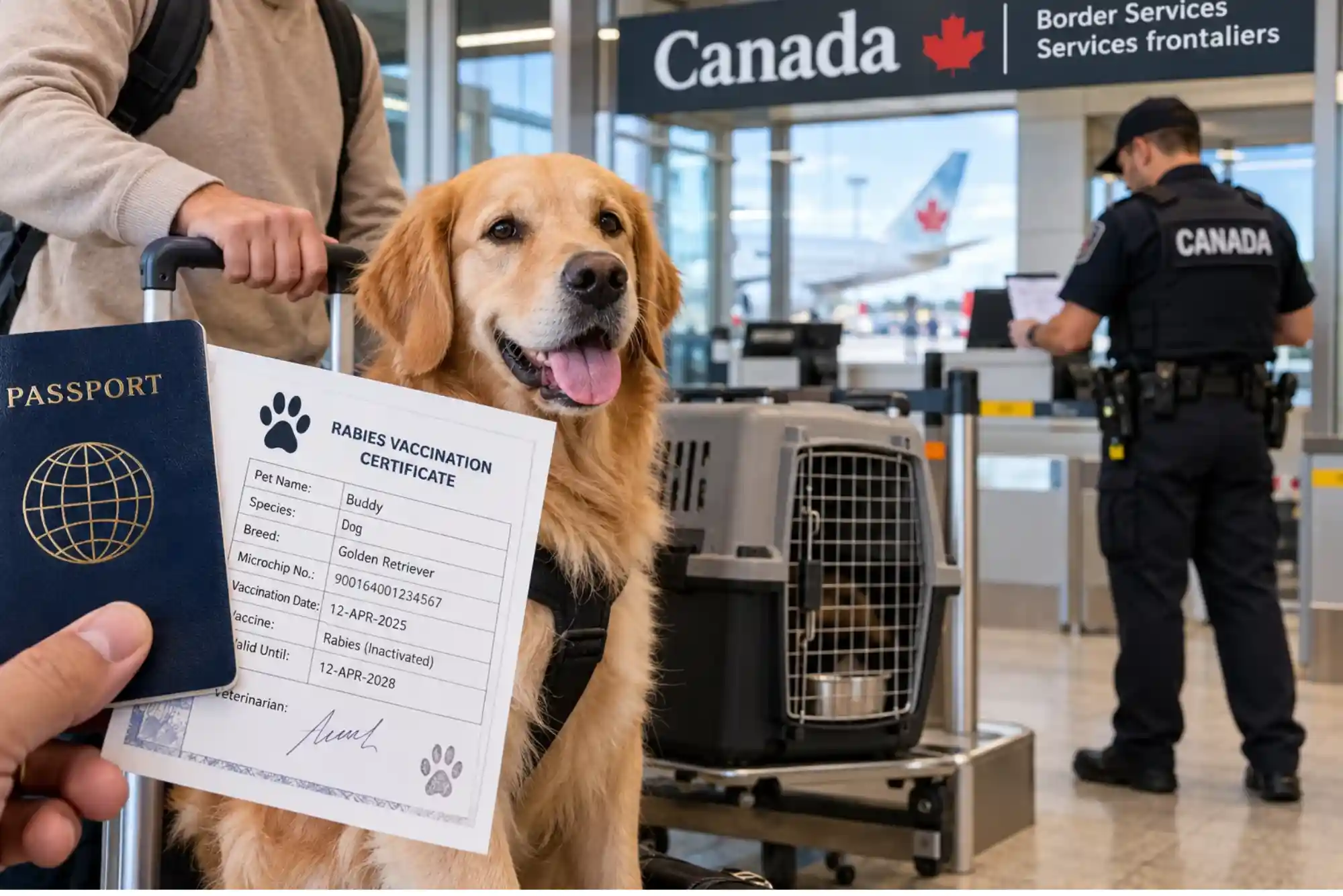
Traveling internationally with a dog requires more preparation than simply booking a flight and packing your pet’s belongings. If you are planning on traveling to Canada with dogs, one of the most important parts of your preparation is understanding Canada’s rabies documentation and border-crossing requirements. Canadian authorities have specific rules for dogs entering the country, and the requirements can vary depending on the dog’s age, country of origin, purpose of travel, and whether the dog is traveling with its owner.
For many travelers, the most important document is a valid rabies vaccination certificate. However, rabies vaccination is not the only consideration. Travelers must also understand how dogs should be declared at the border, what documents should be carried, and what can happen if a dog does not meet Canada’s import requirements.
Canada’s Canadian Food Inspection Agency (CFIA) is responsible for establishing animal import requirements, while the Canada Border Services Agency (CBSA) handles border processing and can inspect animals and documentation. CFIA explains that requirements depend on factors such as the country from which the dog is traveling, the dog’s age, and the purpose of importation.
If you are preparing for an international journey, it is also useful to review resources such as international pet travel before making your final arrangements. Understanding the process in advance can help you avoid delays and make the journey more comfortable for both you and your dog.
Understanding Canada’s Dog Import Requirements
Canada allows personal dogs to enter the country, but travelers are responsible for ensuring that their pets satisfy the applicable import requirements. The rules are designed primarily to reduce the risk of introducing animal diseases, including rabies.
The exact requirements are not identical for every dog. A dog traveling from the United States can be subject to different documentation rules than a dog arriving from another country. Similarly, a young puppy can have different requirements from an adult dog.

The CFIA states that the requirements depend on the dog’s country of origin, age, purpose of importation, and whether the dog is accompanied by its owner. These factors should therefore be checked before purchasing airline tickets or finalizing a travel itinerary.
A good starting point for international pet travel planning is TripMatchUp, where travelers can organize their research and prepare for different aspects of traveling with pets.
Why Rabies Proof Is Important
Rabies is one of the main health concerns associated with international movement of dogs. For this reason, Canada requires appropriate evidence that many dogs entering the country are vaccinated against rabies.
For dogs eight months of age or older arriving from countries that are not designated as rabies-free, the CFIA generally requires either a valid rabies vaccination certificate issued in English or French by a licensed veterinarian from the country of origin, or an acceptable rabies neutralizing antibody titre test, known as an RNATT.
The vaccination certificate needs to clearly identify the dog and demonstrate that the animal is currently vaccinated against rabies. Proper identification is important because border authorities need to be able to determine that the documentation belongs to the dog being presented.
This means that simply telling a border officer that your dog received a rabies vaccination may not be sufficient. The traveler should have the appropriate veterinary documentation available when crossing the Canadian border.
What Should a Rabies Vaccination Certificate Include?
A proper rabies vaccination certificate should contain enough information to identify both the animal and the vaccination.
Important information can include the dog’s identifying details, the veterinarian’s information, the vaccination date, vaccine information, and the vaccination validity or expiry information.
For travelers using NEXUS, CBSA specifically states that a valid rabies vaccination certificate should be signed and dated by a veterinarian and identify the animal by breed, age, sex, coloring, and distinguishing marks. It should also include the vaccine name, serial number, and expiry date.
Even when a traveler is not using NEXUS, keeping a complete original vaccination document is a sensible part of preparing for the border crossing.
The CBSA strongly recommends traveling with the physical original copies of required documents when bringing dogs into Canada.
Traveling to Canada With a Dog From a Rabies-Free Country
Canada recognizes certain countries as being free from rabies for domestic dogs and cats. The current CFIA list includes countries such as Australia, Fiji, Finland, Iceland, Ireland, Japan, New Zealand, Sweden, and the United Kingdom. The list can change and is subject to review.
Dogs coming from a rabies-free country may have different documentation options depending on their age and circumstances.
For example, the CFIA reference document states that dogs eight months or older from a recognized rabies-free country can qualify through certain forms of certification, including documentation from a veterinarian confirming the country’s rabies-free status and the dog’s presence there, or through a valid rabies vaccination certificate. Other options may apply in specific circumstances, including an acceptable antibody titre test.
Because country classifications and requirements can change, travelers should verify the current status close to their departure date rather than relying on an old travel checklist.
Traveling From a Country That Is Not Rabies-Free
Many international travelers will be coming from countries that are not on Canada’s recognized rabies-free list. In these situations, documentation of rabies vaccination becomes particularly important.
For dogs eight months or older arriving from a country that is not designated as rabies-free, Canada’s current import reference requirements include a valid rabies vaccination certificate issued in English or French by a licensed veterinarian in the country of origin. The certificate must clearly identify the dog and demonstrate that the dog is currently vaccinated against rabies.
An RNATT may also be accepted under the applicable rules. The CFIA specifies that the test must meet its requirements and achieve a titre of at least 0.5 IU/ml, with timing requirements connected to the dog’s prior rabies vaccination.
This is why travelers should not leave veterinary paperwork until the day before departure. If a test, vaccination, or updated certificate is required, the process may need to be completed well before the flight.
Rules for Puppies and Young Dogs
Age is an important factor when bringing a dog into Canada.
The CFIA provides different rules for dogs under eight months of age, and some provisions also distinguish dogs under three months old. A dog younger than three months does not require rabies vaccination or certification of origin from a rabies-free country under the specific provision described in the import reference document.
However, this does not mean that every young puppy can simply enter Canada without documentation. The applicable rules depend on factors including the country of origin, whether the puppy is accompanied by its owner, and the purpose of importation.
Therefore, puppy owners should check the precise CFIA requirements for their circumstances instead of assuming that the under-three-month rule applies universally.
Owner-Accompanied Dogs Versus Other Imports
The purpose of the dog’s entry into Canada can affect the applicable requirements.
A personal dog is generally a pet that lives or will live with its owner and is not being transferred or given to another person after arrival. CBSA explains that the owner must be the importer and must have appropriate documentation proving ownership.
Commercial imports can be subject to substantially different rules. Commercial dogs can include dogs intended for transfer, resale, breeding-related purposes, further adoption, fostering, rescue, or certain other activities.
This distinction is particularly important because Canada currently prohibits the entry of commercial dogs from countries considered high-risk for dog rabies. CFIA states that commercial dogs from high-risk countries are not permitted entry under the applicable measure.
Someone simply traveling with their own family pet should therefore make sure the dog is properly categorized as a personal dog and not a commercial import.
Declaring Your Dog at the Canadian Border
One of the most important border rules is simple: declare your dog.
Canadian authorities require travelers to declare animal products and animals they bring into the country. This includes family pets.
CBSA states that officers can refuse entry, detain, or confiscate an animal in certain circumstances, including when an animal is undeclared or when the required permits or certificates are missing.
CBSA also explains that travelers must declare food, plant, and animal products when entering Canada. Failure to declare certain items can result in seizure and penalties.
Declaring your dog does not mean that you should expect a problem at the border. It is simply part of the normal legal entry process.
When asked about your dog, provide accurate information and present the requested documentation.
What Happens During a Border Inspection?
A border crossing may involve a straightforward document check, but officers can also conduct a more detailed inspection.
CBSA officers have authority to inspect animals and verify whether they meet Canadian requirements. A traveler may also be referred for secondary inspection, which is a normal part of border processing and can occur for different reasons.
During secondary inspection, officers may verify travel documents, ask additional questions, inspect luggage, and visually examine pets or other animals.
The best way to make this process easier is to keep your documentation organized and readily available.
Instead of putting your dog’s rabies certificate deep inside checked luggage, keep the original paperwork in your accessible travel documents.
Keep Original Documents With You
Digital copies can be useful as backups, but travelers should not rely exclusively on photographs or scanned documents.
CBSA specifically recommends that travelers bring physical original copies of required documents when bringing dogs into Canada.
A practical travel folder can contain the original rabies certificate, veterinary records, ownership documents, and any other certificates or permits applicable to the particular dog and country of origin.
Keeping backup digital copies can also be helpful if an original document is lost, but the original paperwork should remain the primary travel documentation when required.
Veterinary Preparation Before the Trip
A veterinarian should be involved early in the travel-planning process.
CFIA recommends contacting a local veterinarian once your travel details are known because requirements may include a health certificate, updated vaccinations, testing, medications, or other preparations.
The veterinarian can also help determine whether the rabies certificate accurately identifies the dog and whether the vaccination information is current.
This is particularly important for international travel because a document that is sufficient for one destination may not satisfy the requirements of another.
Before departure, discuss the complete journey with the veterinarian, including the destination, transit countries, travel dates, and transportation method.
Airline Requirements Are Separate From Canadian Border Rules
Meeting Canadian import requirements does not automatically mean that a dog satisfies an airline’s pet-travel requirements.
Airlines can have their own rules concerning kennel dimensions, pet reservations, health documents, temperature restrictions, cabin or cargo eligibility, and other conditions.
Therefore, international pet travel usually involves at least two separate compliance processes: meeting Canada’s government import requirements and meeting the transportation company’s requirements.
A dog may have the correct rabies certificate but still need additional documentation or an approved carrier for the flight.
For this reason, pet owners should contact the airline well before departure and compare its requirements with the Canadian requirements.
Health and Comfort During the Journey
Legal documentation is only one part of responsible pet travel. The physical and emotional well-being of the dog should also be considered.
Long international journeys can involve unfamiliar airports, extended travel times, changes in temperature, waiting periods, and unfamiliar surroundings. A veterinarian can provide guidance appropriate to the individual dog.
The dog should have access to appropriate food and water according to the travel plan, and owners should understand the airline’s rules for feeding and handling the animal.
Travelers should also avoid giving a dog medication simply to make travel easier unless it has been specifically recommended by a veterinarian.
What If the Dog Does Not Meet Canadian Requirements?
Travelers should never assume that a missing document will automatically be overlooked.
CFIA explains that when a dog arrives at the border and does not meet Canadian import requirements, authorities review the situation and make a decision about the animal’s eligibility to enter Canada. Depending on the circumstances, the dog may be ordered removed from Canada, and fines or legal action may also result.
This makes preparation especially important.
If you discover before departure that your dog’s vaccination certificate is incomplete or that another requirement has not been met, contact the relevant Canadian authority or a qualified veterinarian before traveling.
It is much easier to correct a documentation problem before boarding a flight than after arriving at an international border.
Personal Dog Versus Commercial Dog
Travelers should understand the difference between a personal pet and a commercial dog.
A personal dog is generally one that belongs to the traveler and will remain with the owner. Commercial dog imports can involve transfer of ownership, adoption, resale, breeding, fostering, rescue, research, or other purposes.
The distinction matters because the Canadian government has additional restrictions for commercial dogs from countries considered high-risk for dog rabies.
If your travel situation involves adoption, rescue, sale, breeding, or transfer of ownership, do not assume that the normal personal-pet rules apply.
Planning the Border Crossing
A smooth border crossing starts before you leave home.
Begin by confirming the dog’s country of origin and age. Then determine whether the dog is considered a personal or commercial import. After that, review the applicable CFIA requirements and confirm that the rabies documentation meets the current rules.
Next, contact your veterinarian and airline.
Finally, organize the original documents so they are available during the journey.
For travelers planning a broader international trip with a pet, TripMatchUp can also be used as a starting point for organizing travel-related research and planning.
A Practical Preparation Approach
Instead of waiting until the final week, start preparing as soon as your Canadian trip becomes definite.
First, confirm the dog’s vaccination history with your veterinarian. Check that the rabies vaccination is valid and that the certificate clearly identifies the dog.
Next, check the current Canadian requirements based on the country from which the dog will enter Canada. Do not rely solely on a generic internet checklist because the requirements can vary according to circumstances.
Then review the airline’s pet policy and make sure your dog’s carrier or kennel satisfies the airline’s specifications.
Before departure, place your original documents in your hand luggage. Keep copies separately as a backup.
Finally, declare your dog when you arrive in Canada and cooperate with border officers if they request documentation or an inspection.
Common Mistakes Travelers Should Avoid
One common mistake is assuming that every country has the same pet-entry rules. Canada’s requirements depend on several factors, so travelers should verify the rules for their exact situation.
Another mistake is carrying an incomplete rabies certificate. A vaccination record that does not clearly identify the dog or provide the required vaccine information can create problems.
Some travelers also forget to declare their pets. Canadian border rules require travelers to declare animals they are bringing into the country.
Another mistake is confusing personal and commercial imports. A dog being transferred to another person, adopted, or imported for certain commercial purposes may fall under different requirements.
Finally, some travelers check the rules only once, months before their trip. Canadian requirements can change, so checking the official CFIA information again before departure is an important part of preparation.
Final Thoughts on Traveling to Canada With Dogs
Traveling to Canada with dogs can be a manageable process when the owner prepares the correct documentation and understands the border requirements before departure.
For many dogs, proof of current rabies vaccination is a central part of the process. The certificate should properly identify the dog and contain the information required by Canadian authorities. However, rabies documentation is only one part of the overall process. The dog’s age, country of origin, purpose of importation, and whether it is traveling with its owner can all affect the applicable requirements.
Travelers should also remember that dogs must be declared when entering Canada and that CBSA officers can inspect animals and their documentation.
The safest approach is to begin preparation early, work with a veterinarian, confirm the current CFIA requirements, check the airline’s policies, and keep original documentation accessible throughout the journey.
For additional international pet-travel planning, you can also explore international pet travel resources and organize your trip well before your departure date.
Canadian regulations can change, so always verify the latest official requirements for your specific circumstances immediately before traveling. The CFIA and CBSA remain the authoritative sources for Canadian animal-import and border requirements.