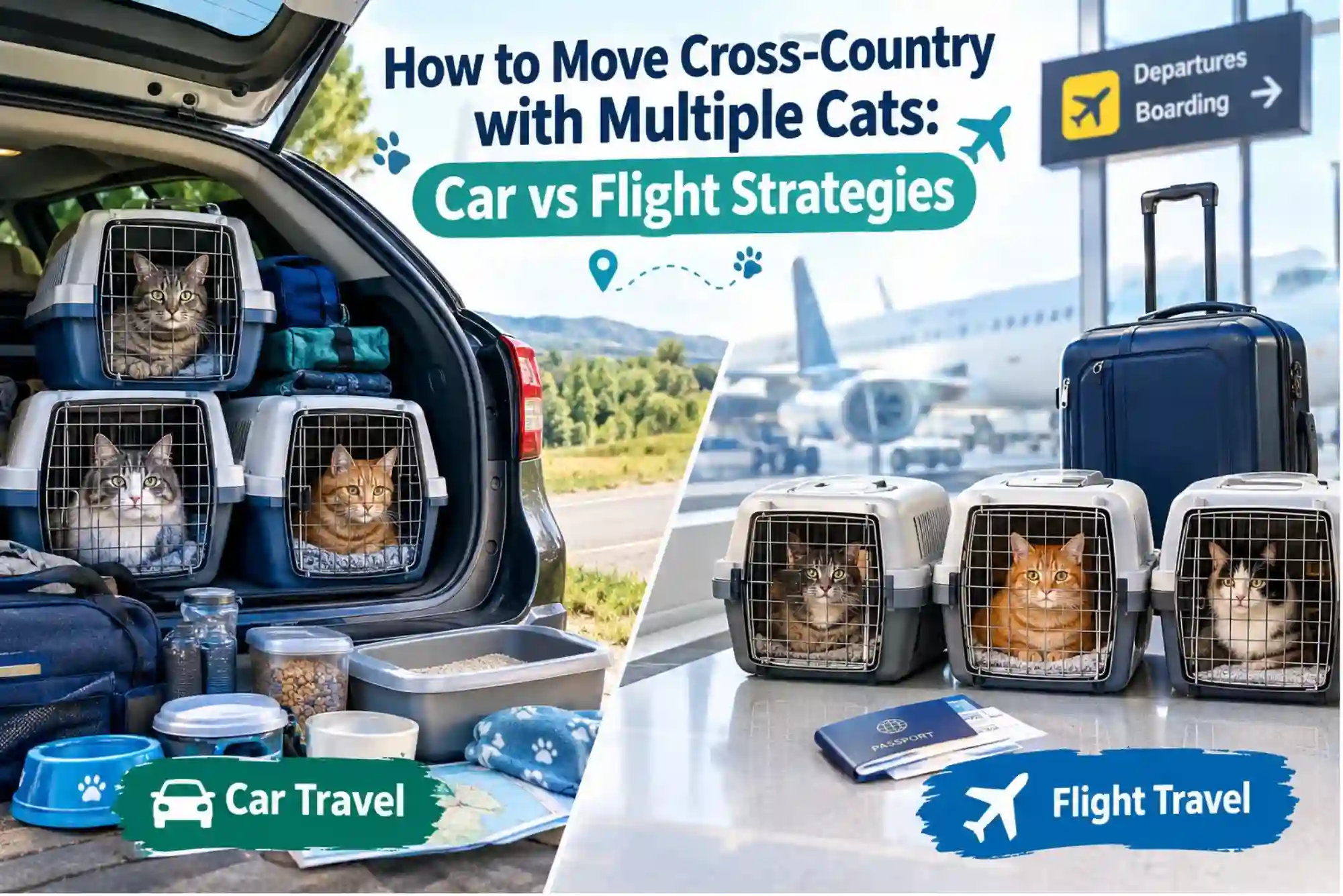
Moving across the country with multiple cats can be a major undertaking. Unlike moving furniture or packing household belongings, relocating cats requires careful attention to their comfort, safety, health, temperament, and individual travel needs. When several cats are involved, the planning becomes even more important because every cat may respond differently to long-distance transportation.
For some families, driving across the country provides more control over the journey. Owners can decide when to stop, monitor their cats throughout the trip, and adjust the schedule when necessary. For others, flying can significantly reduce travel time and may be practical when the distance is too great for a long road trip. However, airline rules, carrier requirements, documentation, and limits on the number of pets allowed can make flying more complicated when several cats are traveling together.
The right approach depends on factors such as the number of cats, their ages, health conditions, personalities, tolerance for travel, distance, weather, budget, and transportation options available at the time of the move. There is no single method that works perfectly for every household.
Before planning a long-distance move, it is useful to review reputable pet-travel guidance and destination requirements. The Centers for Disease Control and Prevention recommends preparing pets in advance, keeping identification information updated, maintaining vaccinations, and checking destination regulations before traveling.
This guide explains how to move cross-country with multiple cats and compares driving with flying so that cat owners can understand the practical considerations involved.
Understanding the Challenges of Moving Multiple Cats
Traveling with one cat can require preparation, but traveling with two, three, or more cats introduces additional challenges. Each cat may have a different personality and tolerance for unfamiliar environments. One cat may remain calm inside a carrier while another becomes anxious as soon as the carrier appears.

The number of carriers is also important. Multiple adult cats generally should not simply be placed together because they live in the same household. Stress can cause animals that normally get along to behave differently during transportation. The International Air Transport Association notes that animals may become stressed and aggressive during air travel and advises caution when placing animals together in the same container.
For a cross-country move, owners should therefore think about each cat individually while also considering how the entire group will be transported.
Before departure, make sure every cat has reliable identification. Microchipping is particularly useful because collars can become lost or displaced. The CDC recommends microchipping pets and keeping owner contact information current before travel.
A veterinary appointment can also help identify any issues that might make travel more difficult. Depending on the destination and transportation method, health certificates, vaccination records, or other documents may be required.
For additional guidance about traveling with pets, owners can also review TripMatchUp’s International Pet Travel resource, particularly when the move involves crossing international borders at some stage of the journey.
Car Travel With Multiple Cats
Driving is often attractive to cat owners because it provides greater control over the travel environment. Instead of dealing with airport security, flight schedules, airline pet limits, and connections, the owner controls the vehicle and can plan the route around the cats’ needs.
A road trip also allows owners to remain physically close to their cats throughout most of the journey. This can make it easier to observe behavior, provide water when appropriate, check carriers, and respond to unexpected problems.
However, driving does not automatically mean that the journey will be stress-free. A cross-country road trip can take many hours or even several days, and some cats experience motion sickness or become anxious during extended car rides.
Preparing Cats for a Long Car Journey
Preparation should begin well before moving day. If a cat is unfamiliar with traveling by car, short practice trips can help it gradually become accustomed to the experience.
The CDC recommends taking pets on a series of short drives and gradually increasing the amount of time spent in the vehicle.
Carriers should also be introduced in advance rather than appearing suddenly on moving day. Keeping carriers accessible at home can help cats become more comfortable with them. Bedding that smells familiar can also make the carrier feel less unfamiliar.
Every cat should have a properly sized, well-ventilated carrier. The carrier should be positioned securely so that it cannot slide around if the vehicle brakes suddenly. The CDC specifically recommends securing crates so they do not shift during sudden stops.
How to Arrange Multiple Cat Carriers in a Vehicle
The vehicle should have enough space for all carriers without stacking them in a way that blocks ventilation. Carriers should not interfere with the driver’s visibility, access to controls, or emergency exits.
Cats should remain contained during the drive. Allowing a cat to roam freely inside a moving vehicle can create safety problems for both the animal and the driver.
The interior temperature should remain comfortable. Never leave cats unattended inside a parked vehicle, even if the windows are partially open. Temperatures inside vehicles can rise rapidly in warm weather, creating a potentially life-threatening situation.
For long trips, planning accommodation in advance is especially important. Not every hotel accepts multiple pets, and some properties have limits on the number or type of animals allowed.
Feeding Cats Before and During a Road Trip
Food planning is another important consideration. Sudden changes in feeding schedules can contribute to digestive problems, particularly when a cat is already experiencing travel stress.
The CDC recommends feeding pets several hours before departure to reduce the chance of motion sickness or vomiting.
Owners should bring the cats’ normal food rather than changing diets during the move. Water should also be available according to the cats’ normal needs and veterinary advice.
Food bowls, water containers, litter supplies, waste bags, cleaning materials, medication if prescribed, and copies of veterinary records should be kept easily accessible rather than packed deep inside the moving vehicle.
Managing Litter During a Cross-Country Drive
Litter management becomes much more important when multiple cats are traveling for an extended period.
A portable litter box can be placed in a secure area during planned stops, but owners should be careful when opening vehicle doors. A frightened cat can move quickly if it escapes from a carrier.
A safe enclosed location is essential before allowing any cat outside its carrier during a journey. If the environment cannot be secured, it is safer to keep the cat contained.
Absorbent pads inside carriers can also make unexpected accidents easier to manage. Bringing extra bedding and cleaning materials can prevent one accident from becoming a major disruption to the journey.
Flying With Multiple Cats
Flying can reduce the physical duration of a cross-country move, but it introduces a different set of complications.
Airlines have their own pet policies, and the rules can vary considerably. The Federal Aviation Administration explains that airlines decide whether pets can travel in the passenger cabin and may impose additional restrictions on the types and number of pets permitted.
The U.S. Department of Transportation similarly notes that airlines establish their own requirements regarding pet travel, including fees, carrier sizes, age requirements, seating restrictions, and health documentation.
This is particularly important when moving multiple cats because a policy that works for one cat may not work for three or four cats.
Before purchasing tickets, contact the airline and confirm the pet policy for the exact flight. Do not assume that because an airline permits cats generally, it will automatically accept the number of cats you need to transport.
For current airline-specific requirements, owners can also begin their planning through TripMatchUp, which provides pet-travel information and resources.
Cabin Travel With Cats
When an airline allows cats in the cabin, the carrier generally needs to fit underneath the seat in front of the passenger. FAA guidance states that a pet carrier traveling in the cabin is treated as carry-on baggage and must remain properly stowed during aircraft movement, takeoff, and landing.
This creates a practical challenge for households with multiple cats. A single passenger may not be able to bring several cats into the cabin because airlines can impose limits on the number of pets permitted per passenger or flight.
If multiple people are traveling, it may be possible to distribute carriers among passengers, depending entirely on the airline’s rules. This should be confirmed before booking.
The carrier should be airline-compliant and large enough for the cat to remain reasonably comfortable while still meeting the airline’s under-seat requirements. IATA guidance emphasizes that an appropriate container should allow the animal to turn around normally, stand, sit, and lie down naturally.
Flying With Cats in Cargo
Some situations may require cats to travel in an aircraft’s designated animal transport area rather than the passenger cabin. Policies differ by airline, aircraft, destination, weather conditions, and the animal’s characteristics.
The USDA notes that air travel carries specific risks and that pet health, readiness, kennel suitability, and other factors can affect travel safety.
Because of these considerations, owners should not choose cargo transportation solely because it appears convenient. They should first discuss the option with their veterinarian and confirm the airline’s current procedures.
Weather is another important consideration. The Department of Transportation explains that some airlines restrict pets from cargo transportation during periods of extreme heat or cold.
For a household moving multiple cats, these restrictions can become especially significant because all cats may not be accepted under identical circumstances.
Car vs Flight: Which Travel Method Fits Your Move?
The choice between driving and flying depends largely on the circumstances of the move.
Driving provides more control. The owner can determine the departure time, route, rest schedule, and accommodation. If a cat becomes particularly stressed, the owner has greater flexibility to adjust the journey.
Flying, on the other hand, can dramatically reduce the number of hours spent traveling. A journey that would require several days by car may take only a few hours in the air, although airport procedures, check-in requirements, transportation to and from airports, and possible connections add additional time.
For multiple cats, driving may be easier when the owner has access to a suitable vehicle and can tolerate a longer journey. Flying may be practical when the distance is extremely large or when a lengthy road trip would create greater logistical problems.
Neither method should be selected solely on travel time. The health and temperament of the cats, the season, airline restrictions, and the ability to maintain a safe environment should all be considered.
Preparing Veterinary Documents
Documentation should be organized well before moving day.
Depending on the destination, cats may need vaccination records, health certificates, identification information, or other documentation. Requirements vary according to the location and transportation provider.
For air travel, some airlines require a veterinary health certificate issued within a specific period before departure. The DOT notes that some airlines require certified health records issued within 10 days of travel.
USDA guidance also describes health and acclimation documentation and notes that a veterinarian may need to certify that a cat is suitable for air transportation.
Owners should verify the requirements directly with the airline and relevant government authorities because rules can change.
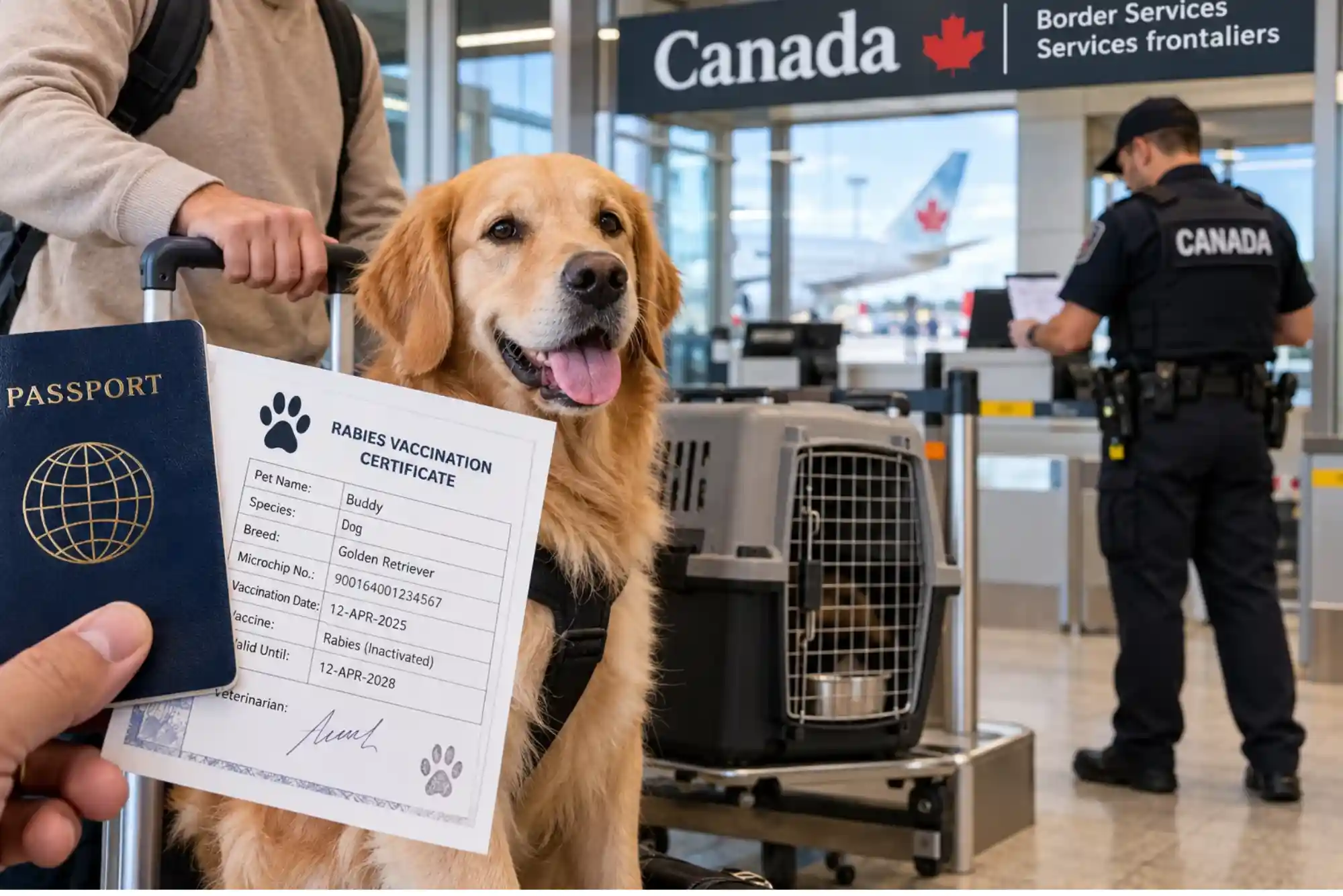
For international moves, documentation becomes even more important. Country-specific requirements may include veterinary certificates, vaccinations, identification, import permits, or quarantine rules. The IATA advises travelers to check country-specific regulations as well as airline requirements.
This is why a resource such as TripMatchUp’s International Pet Travel guide can be useful when researching the documentation and planning considerations involved in longer-distance pet relocation.
Helping Cats Adjust Before Moving Day
A successful move begins before the actual journey.
Cats often respond strongly to changes in their environment. Packing boxes, moving furniture, unfamiliar people, and changes in household activity can increase anxiety.
Keeping a quiet room available during the packing process can provide cats with a more predictable environment. Their familiar food, water, bedding, litter box, and other necessities should remain available until the final stage of the move.
Carriers should also be introduced gradually. Rather than forcing cats into unfamiliar carriers at the last minute, allowing them to investigate carriers beforehand can make the process more manageable.
For cats that have never traveled, practice trips can be particularly valuable. Even a short drive can help identify problems such as motion sickness, excessive vocalization, or fear before the actual cross-country journey.
Choosing the Right Travel Carriers
The carrier is one of the most important pieces of equipment for moving cats.
For car travel, a carrier should be sturdy, secure, well ventilated, and appropriately sized. It should provide enough room for the cat to change position without being so large that the animal is thrown around during sudden vehicle movement.
For air travel, the carrier must satisfy the airline’s specific requirements. A carrier that works perfectly in a car may not fit beneath an aircraft seat.
Because airline specifications can vary, owners should not purchase several carriers until they have confirmed the requirements for their specific airline and flight.
Each carrier should also have identifying information attached. Including the owner’s name and contact information can be useful if a carrier becomes separated from the owner during travel.
Keeping Multiple Cats Calm During the Move
Cats may respond to travel in different ways. Some become quiet, while others vocalize, hide, or appear restless.
The goal should not be to completely eliminate every sign of stress but to create a predictable, secure environment.
Familiar-smelling bedding can help maintain continuity. Maintaining the cats’ normal diet can also reduce unnecessary changes during an already disruptive period.
Medication or sedatives should never be given simply because an owner wants a cat to sleep during travel. Any medication should be discussed with a veterinarian. Airline policies may also restrict or discourage sedated animals. For example, American Airlines states that it does not accept pets that have been sedated or tranquilized for certain transportation arrangements because of associated respiratory and cardiovascular concerns.
The veterinarian should determine whether medication is appropriate for an individual cat.
Planning the Route for a Cross-Country Cat Move
A road trip should be planned around realistic travel periods rather than simply calculating the shortest possible route.
Drivers should identify pet-friendly accommodations before leaving. It is also useful to know where veterinary clinics are located along the route, especially if one of the cats has a known medical concern.
Weather should be monitored before and during the journey. Extreme heat can create serious problems for cats traveling inside vehicles, while severe winter conditions can create different hazards.
If weather conditions become unsafe, flexibility is important. A delay may be preferable to forcing cats through dangerous conditions.
The vehicle should also have sufficient space for carriers, food, litter supplies, water, cleaning supplies, medications, documents, and personal belongings without compromising ventilation or safety.
What to Pack for Multiple Cats
Packing for cats requires more than simply bringing food and carriers.
Owners should have enough familiar food for the journey, water, bowls, litter, disposable litter trays or a portable box, absorbent pads, waste bags, paper towels, cleaning supplies, spare bedding, identification information, veterinary records, and any veterinarian-prescribed medications.
It is also wise to keep photographs of each cat. If a cat becomes separated from its owner, current photographs can help with identification.
A small emergency kit can also be useful. It should contain basic pet-care supplies appropriate for the individual animals, while any medical treatment should follow veterinary advice.
Arriving at the New Home
The journey does not end when the vehicle reaches the destination.
A new home can be overwhelming for cats because everything smells different and familiar landmarks have disappeared.
Rather than immediately giving multiple cats unrestricted access to the entire house, owners may choose to establish a quiet transition area where the cats can safely settle.
Food, water, litter boxes, bedding, and familiar items can be placed in this area. Once the cats begin adjusting, their access to the rest of the home can gradually increase.
Keeping routines consistent after arrival can also help. Feeding times, familiar foods, litter arrangements, and normal interaction patterns provide continuity after a major environmental change.
Common Mistakes to Avoid
One common mistake is waiting until moving day to purchase carriers. This can create unnecessary stress if the carriers are too small, poorly ventilated, or incompatible with the selected airline.
Another mistake is assuming that an airline’s pet policy is the same across all flights. Airline rules can change depending on aircraft, route, destination, season, and available pet capacity. The FAA and DOT both emphasize that airlines establish their own pet policies.
Another issue is failing to verify destination requirements. Even domestic moves can involve state-specific rules, while international travel can involve substantially more documentation.
Owners should also avoid leaving cats unattended in parked vehicles. Temperature changes inside a car can become dangerous quickly.
Finally, avoid treating every cat identically. Multiple cats from the same household can still have completely different reactions to travel.
Making the Final Decision: Car or Flight?
The best transportation strategy depends on the details of the move rather than a universal rule.
A car journey offers flexibility, direct supervision, and greater control over the environment. It may be particularly practical for families with several cats because the owner does not have to satisfy an airline’s limited pet capacity.
Flying offers speed and can make very long-distance relocation more manageable. However, it requires careful coordination with the airline and may involve restrictions on cabin pets, carriers, documentation, aircraft types, weather, and the number of animals accepted.
When deciding between the two, consider the total journey rather than only the time spent driving or flying. Airport transportation, check-in, security procedures, waiting periods, connections, and ground transportation can all affect the actual travel experience.
The cats’ individual health and temperament should also be considered. A cat that becomes extremely distressed in a vehicle may have different needs from a cat that becomes anxious in unfamiliar airport environments.
For broader pet-moving resources and travel planning information, TripMatchUp can also be incorporated into the research process before finalizing a relocation plan.
Final Thoughts
Moving cross-country with multiple cats requires planning, patience, and attention to individual needs. Whether you choose to drive or fly, preparation should begin well before departure.
Driving can provide greater control over the environment and schedule, while flying can shorten the physical travel time for extremely long-distance relocations. However, both methods require safe carriers, appropriate identification, adequate supplies, veterinary preparation, and careful consideration of the cats’ health and temperament.
Airline requirements should always be checked directly with the carrier because policies vary. Government agencies and organizations such as the FAA, USDA, CDC, DOT, and IATA provide useful guidance, but the requirements applicable to a specific journey can depend on the route and circumstances.
The most successful relocation is one that treats the cats as individual travelers rather than simply treating them as additional luggage. With enough preparation, a carefully planned route, suitable carriers, appropriate documentation, and a calm transition into the new home, families can make a cross-country move considerably more manageable for themselves and their cats.