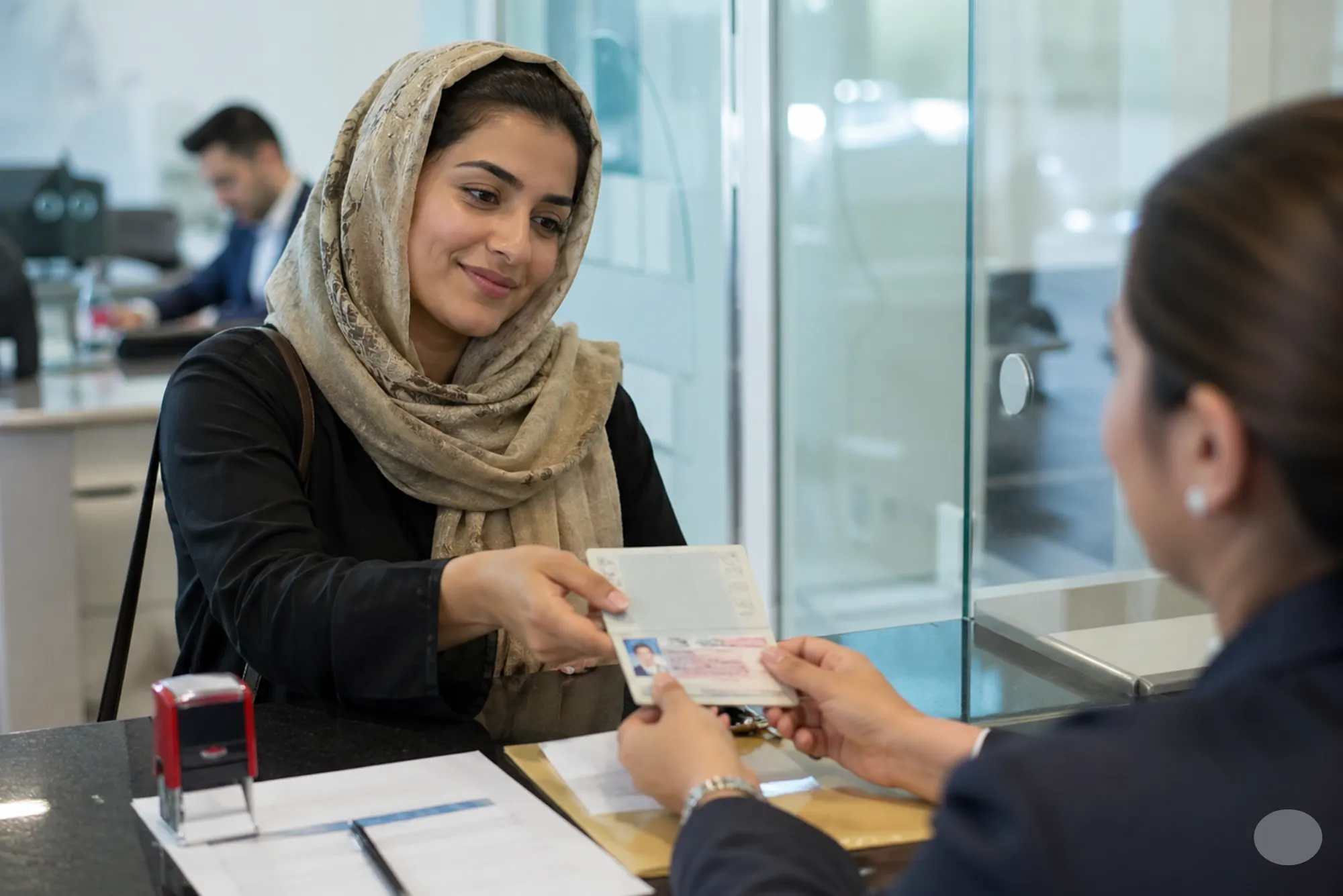
The minimum official cost of a US student visa (F1) from Pakistan in 2026 is USD 535 — comprising a USD 185 non-immigrant visa application fee (MRV) and a USD 350 SEVIS I-901 fee. Including biometric service charges, travel, and document preparation, most Pakistani students budget between USD 635 and USD 835 for the visa process alone. Proof of financial support for tuition and living expenses is a separate requirement but not a visa fee.
The good news: the official US government fees are fixed and clearly defined. The complexity comes from the supporting costs — biometrics, document preparation, currency conversion, and the financial proof requirements that accompany the application. This guide breaks down every line item, walks through the complete step-by-step process, and explains what actually happens at the interview so Pakistani applicants can approach the US Embassy or Consulate with confidence.
Types of US Student Visas Available from Pakistan
Before examining costs, it is important to understand which visa type applies to your study plans. There are three student visa categories issued by the United States, and the correct choice depends entirely on the nature of your program:
| Visa Type | Purpose | Program Duration | Most Common For |
|---|---|---|---|
| F-1 Visa | Full-time academic study | Duration of program + 60-day grace period | Universities, colleges, high schools, language institutes (18+ hrs/week) |
| M-1 Visa | Vocational / non-academic study | Duration of program + 30 days | Technical training, mechanical programs, professional courses |
| J-1 Visa | Exchange visitor programs | Program-specific | Government-sponsored exchanges, research fellowships |
For the vast majority of Pakistani students — whether pursuing a Bachelor’s, Master’s, or PhD — the F-1 visa is the applicable category. The cost structure described throughout this guide applies primarily to F-1, though SEVIS and application fees are also charged for M-1 and J-1 applicants. Both the US Embassy in Islamabad and Consulates in Karachi, Lahore, and Peshawar process student visa applications.
Official US Student Visa Fees in 2026: The Fixed Costs
Two fees are compulsory for every F-1 applicant worldwide, regardless of nationality. These are set by the US government and cannot be negotiated, waived, or paid through an agent on your behalf — they must be paid directly to the respective official portals.

| Fee Component | Amount (USD) | Approx. PKR | Paid To | When to Pay |
|---|---|---|---|---|
| MRV / DS-160 Application Fee | USD 185 | ~PKR 51,700 | US Dept. of State via Allied Bank (Pakistan) | Before scheduling interview appointment |
| SEVIS I-901 Fee | USD 350 | ~PKR 97,800 | ICE/SEVP via FMJFee.com | After receiving Form I-20; before interview |
| Total Official Government Fee | USD 535 | ~PKR 1,49,500 | – | – |
A critical point on the MRV fee: Pakistani applicants pay it at any branch of Allied Bank in Pakistan. The fee is denominated in USD but can be paid in PKR at the prevailing exchange rate. The payment generates a receipt with a unique barcode number that is required to schedule the visa interview appointment — without it, the scheduling portal will not proceed.
The SEVIS fee covers the Student and Exchange Visitor Information System — the database that tracks international students’ academic status in the US. It is paid online through FMJFee.com using the SEVIS ID printed on Form I-20. Save the confirmation receipt in both digital and printed form; consulates and universities regularly ask for it.
Complete Cost Breakdown: What Pakistani Students Actually Pay
The USD 535 official total is only the starting point. When all the real-world costs around the application process are added — biometrics, photos, document preparation, travel to the interview city, and consultant fees where applicable — the total rises. The following table reflects the realistic cost range for a Pakistani student applying from Islamabad, Lahore, or Karachi:
| Cost Item | USD | Approx. PKR | Notes |
|---|---|---|---|
| MRV Application Fee (DS-160) | 185 | ~51,700 | Non-refundable; paid at Allied Bank |
| SEVIS I-901 Fee | 350 | ~97,800 | Non-refundable; paid at FMJFee.com |
| Biometric / Appointment Service Fee | ~30–50 | ~8,400–14,000 | VFS Global service charge (if applicable) |
| Passport Photos | ~3–8 | ~840–2,240 | Must meet US visa photo specifications |
| Document Preparation (attested copies, translations) | ~20–80 | ~5,600–22,400 | Varies by document requirements |
| Travel to Interview (within Pakistan) | ~20–100 | ~5,600–28,000 | If applicant is not in interview city |
| Optional: Education Consultant Fee | ~100–300 | ~28,000–83,800 | Paid to private visa/admissions consultant |
| Realistic Total Range | 635–1,073 | ~1,77,400–3,00,000 | Without tuition or living costs |
What Is SEVIS and Why It Costs USD 350
The SEVIS fee is one of the most misunderstood charges in the US student visa process. Many applicants assume it is an optional administrative charge or something their university covers on their behalf — neither is true for most F-1 applicants.
SEVIS — the Student and Exchange Visitor Information System — is the US Department of Homeland Security’s tracking database for international students. Every student who receives a Form I-20 (the official admission confirmation from a SEVP-certified US school) is assigned a unique SEVIS ID. The I-901 fee of USD 350 activates that SEVIS record and is a prerequisite for the visa to be issued.
Important clarifications for Pakistani students:
- The SEVIS fee must be paid after you receive your Form I-20 and before your visa interview.
- It must be paid by the student or their sponsor — not the university, not a consultant.
- If you later receive a new I-20 with a different SEVIS ID (e.g., switching programs), you typically pay the fee again.
- STEM graduates extended under the OPT program do not pay a new SEVIS fee for the extension if the SEVIS ID has not changed.
Payment is made through FMJFee.com. Print the payment confirmation and carry it to your interview — consular officers regularly ask to see it alongside the I-20.
F1 Visa Requirements for Pakistani Students: Full Document Checklist
A well-prepared application file reduces the likelihood of rejection and minimizes back-and-forth with the embassy. Pakistani applicants for the F-1 visa must present the following at their interview:
- Valid Pakistani passport — Must be valid for at least 6 months beyond your intended period of stay in the US. Ensure at least two blank pages are available.
- DS-160 Confirmation Page — Printed confirmation from the completed online visa application form. The barcode on this page is required for interview check-in.
- Visa interview appointment letter — Printed confirmation of the scheduled interview date, time, and location.
- Form I-20 — Original signed Form I-20 issued by your SEVP-certified US institution. This is the most critical document in the file.
- SEVIS fee payment receipt — Proof of I-901 payment from FMJFee.com.
- MRV fee payment receipt — Allied Bank receipt confirming payment of the USD 185 application fee.
- Passport-sized photographs — Recent photos meeting US visa photo specifications (white background, specific dimensions).
- Academic transcripts and certificates — O-Level/A-Level results, matriculation certificates, FSc/ICS records, bachelor’s degree transcripts as applicable to your program level.
- English proficiency test score — IELTS, TOEFL, or equivalent. Some institutions accept evidence of prior English-medium schooling.
- Standardized test scores (if applicable) — GRE, GMAT, SAT scores as required by your program.
- University acceptance letter — Official offer of admission from the US institution.
- Financial proof — Bank statements, fixed deposit certificates, or scholarship award letters demonstrating the ability to cover tuition and living expenses. Sponsor’s income documents where applicable.
- Proof of ties to Pakistan — Property documents, family ties, employment plans post-graduation — anything that demonstrates intent to return.
- Police clearance certificate — Confirming no criminal charges against the applicant in Pakistan.
- Biometric enrollment — Fingerprints and photographs collected at the consulate on the day of the interview.
Step-by-Step: How to Apply for a US Student Visa from Pakistan in 2026
The application process follows a strict sequential order — attempting steps out of sequence is one of the most common reasons Pakistani students face delays. Here is the complete step-by-step process:
- Secure admission to a SEVP-certified US institution. You cannot begin the visa process without an official acceptance. Verify that your institution is listed in the SEVP database at ICE.gov.
- Receive Form I-20 from your institution. Once admitted, your Designated School Officer (DSO) issues this form. Review every field carefully — your program start date, program level, and name must match your passport exactly.
- Pay the SEVIS I-901 fee. Go to FMJFee.com, enter your SEVIS ID from the I-20, and pay USD 350 online. Save and print the confirmation.
- Complete the DS-160 online application form. Access the form at ceac.state.gov. Fill it out accurately — information here must match your I-20 and passport. Print the confirmation page with its barcode upon completion.
- Pay the MRV fee (USD 185). Visit any Allied Bank branch in Pakistan with your DS-160 confirmation page barcode. Pay in PKR at the prevailing rate. Save the bank receipt — it contains your payment confirmation number.
- Schedule your visa interview appointment. Log in to the US Embassy appointment scheduling portal (ustraveldocs.com/pk) using your passport number, MRV receipt number, and DS-160 barcode. Select the US Embassy in Islamabad or the Consulate in Karachi, Lahore, or Peshawar.
- Prepare your financial and academic documentation. Assemble all documents from the checklist above. Organize them in a clear, logical order. Consistency across all documents is critical — any discrepancy between your DS-160, I-20, bank statements, and academic records can create complications.
- Attend the visa interview. Arrive early. Consular officers in 2026 conduct shorter, more focused interviews — often under two minutes. The key areas of focus are: clarity of academic purpose, demonstrated financial ability, and evidence of ties to Pakistan that make return home after graduation credible.
- Biometric enrollment. Fingerprints and photographs are collected at the consulate at the time of the interview.
- Receive your visa. If approved, your passport is retained briefly for visa stamping and returned either via courier or collection. Processing after interview approval typically takes a few business days.
Where to Apply: US Embassy and Consulates in Pakistan
Pakistan has multiple US diplomatic posts that process student visas. Applicants can choose the location most convenient to them — there is no requirement to apply at the post closest to your home city. All posts process F-1 applications, but appointment wait times vary by location and season.
| Location | Type | City | Visa Services |
|---|---|---|---|
| US Embassy Islamabad | Embassy | Islamabad | Full visa services including F-1 |
| US Consulate General Karachi | Consulate | Karachi | Full visa services including F-1 |
| US Consulate Lahore | Consulate | Lahore | F-1, J-1, and other non-immigrant visas |
| US Consulate Peshawar | Consulate | Peshawar | F-1 and other non-immigrant visas |
Interview appointment wait times fluctuate significantly depending on the time of year and overall application volumes. Students targeting a September semester start should schedule their interview at least 3–4 months in advance. For February intake, applying in October or November of the preceding year is advisable. Waiting until 4–6 weeks before your I-20 start date significantly increases risk.
Financial Proof Requirements: What the Consulate Actually Expects
The financial proof requirement is where many Pakistani applicants underestimate the preparation needed. It is not a visa fee — it is a demonstration that the student and their sponsor can cover tuition and living costs for the duration of the program without needing to work illegally in the US.
What Counts as Acceptable Financial Evidence
The consulate looks for documented, liquid financial resources. Acceptable evidence typically includes:
- Bank statements from the past 3–6 months showing consistent balance sufficient to cover at least the first year of tuition and living expenses
- Fixed deposit (FD) certificates or savings accounts in the student’s or sponsor’s name
- Scholarship award letters from the US institution (this is one of the strongest supporting documents)
- Sponsor’s income documentation — salary slips, business income proof, property ownership
- Financial guarantee letters where applicable
How Much Is “Enough”?
There is no universal minimum, but as a working benchmark: total first-year costs at a US university typically range from USD 30,000 to USD 75,000 depending on the institution and location. The financial documents should demonstrate coverage of this range for the sponsoring family. Scholarship coverage, if full or partial, reduces the liquid funds required to be shown.
For students planning to move internationally for studies, understanding how to handle cross-border financial transfers is practical knowledge. The guide on sending money internationally at TripMatchup covers how international transfers work — useful for students and sponsors managing tuition remittances from Pakistan to US institutions.
US Student Visa Processing Time from Pakistan
Processing time is one of the most anxiety-inducing variables in the entire visa process, and for good reason — your I-20 has a specific program start date that cannot be missed. Understanding the realistic timeline helps you plan without cutting it dangerously close.
| Stage | Typical Timeframe | What Drives Variation |
|---|---|---|
| Admission + I-20 issuance | 2–8 weeks after acceptance | Institution processing speed; program start date |
| SEVIS fee + DS-160 completion | 1–3 days | Largely within applicant’s control |
| Interview appointment wait time | 2–8 weeks | Season, consulate location, overall visa demand |
| Post-interview processing | 2–5 business days (typical) | Administrative review; background check requirements |
| Total recommended lead time | 3–5 months before program start | Build in buffer for document corrections and delays |
Administrative processing (previously known as security check) can extend the post-interview wait to weeks or occasionally months for some applicants. This is not unique to Pakistanis — it is applied globally based on specific application flags. It is entirely outside the applicant’s control and cannot be expedited by an agent. Starting the process early is the only effective buffer.
The Visa Interview: What Pakistani Students Need to Know in 2026
The visa interview is the single most consequential step in the entire process — and the one most applicants over-prepare for in the wrong direction. In 2026, consular interviews in Pakistan are shorter and more pointed than in previous years, often lasting less than two minutes. Officers are trained to assess three core questions rapidly:
- Is the academic purpose genuine and clearly articulated? — Why this university, why this program, and why now.
- Is the financial plan credible? — Do the documents show real, sufficient, and accessible funds? Do they match the I-20 cost figures?
- Does the applicant have strong ties to Pakistan? — Is there a credible reason to return after graduation? Career plans, family, property, or employment prospects all count.
Officers increasingly report that memorized, scripted answers raise more flags than genuine ones delivered with natural confidence. Practicing answers out loud — rather than memorizing a word-for-word script — consistently produces better outcomes. Speak to your academic plans in terms of your specific career goals, not in generic phrases about “a better future.”
Working in the USA on an F-1 Visa: What Pakistani Students Can Do
Work authorization is one of the most frequently misunderstood aspects of the F-1 visa. The rules are specific, and violating them risks visa revocation and deportation — yet many Pakistani students arrive without clearly understanding what is and is not permitted.
On-Campus Employment
F-1 students are permitted to work on campus at their US institution for up to 20 hours per week during academic semesters and full-time (40 hours) during official school breaks. No additional authorization is needed — on-campus employment is built into the F-1 status from day one.
Curricular Practical Training (CPT)
CPT allows F-1 students to work off campus as part of a curriculum-integrated work program. It requires authorization from the DSO and is directly tied to the academic program. CPT used for 12 months or more full-time eliminates eligibility for OPT.
Optional Practical Training (OPT)
OPT allows F-1 students to work in a role directly related to their major for up to 12 months post-graduation. STEM graduates can apply for a 24-month extension, allowing a total of 36 months of OPT work authorization. OPT is one of the most important long-term planning considerations for Pakistani students — it provides a bridge period between graduation and any subsequent visa application.
Common Mistakes Pakistani Students Make During the F-1 Application
Patterns in rejected and delayed applications from Pakistan show a consistent set of avoidable mistakes. Knowing them in advance costs nothing; learning them after a rejection costs several months and the entire MRV fee:
- Inconsistent information across documents. A name spelled differently on the DS-160 versus the passport, or an I-20 start date that does not match the acceptance letter, creates immediate doubt in the consular officer’s mind.
- Financial documents that do not match the I-20 cost estimate. Submitting bank statements showing PKR 500,000 for an institution where the I-20 lists USD 55,000 in annual costs, without an explanation (scholarship letter, sponsor documentation), is one of the most common rejection triggers.
- Vague academic purpose answers. Answering “I want to get a better education” without being able to explain why this specific university, this specific program, and this specific timing — is a weak answer that experienced consular officers treat as low-confidence.
- Applying without confirmed admission. The entire visa process is predicated on a valid I-20. Students who attempt to apply speculatively without a confirmed acceptance letter and issued I-20 cannot proceed and waste preparation time.
- Missing the SEVIS fee receipt at the interview. This document is explicitly requested. Not having it in hand at the interview — even with proof of payment on a phone — creates unnecessary friction.
- Over-relying on a consultant without understanding the application. Consultants can help organize the process, but consular officers interview the student, not the consultant. Applicants who do not understand their own documents or cannot speak naturally about their academic plans often struggle at the interview stage regardless of how polished their file looks.
Costs Beyond the Visa: Budgeting for Studying in the USA
The visa fees are a small fraction of the total financial commitment involved in studying in the United States. For Pakistani families conducting a realistic financial plan, the following table provides order-of-magnitude estimates for the first year of study:
| Cost Category | Estimated Annual Range (USD) | Notes |
|---|---|---|
| Tuition fees (undergraduate) | USD 20,000–55,000 | State universities vs. private; varies significantly |
| Tuition fees (postgraduate) | USD 15,000–60,000 | STEM programs often higher; scholarships available |
| On-campus housing and meals | USD 10,000–18,000 | Off-campus can be lower in smaller cities |
| Health insurance | USD 1,500–3,000 | Usually mandatory; often purchased through university |
| Books, supplies, personal expenses | USD 2,000–5,000 | Digital resources reducing book costs in many programs |
| Return airfare (Pakistan–USA) | USD 800–1,800 | Varies by route, airline, and booking timing |
| Estimated First-Year Total (incl. visa) | USD 35,000–85,000+ | Scholarships can significantly reduce this range |
For students navigating international financial planning — including how to budget for a multi-year study program while managing currency risk — practical money management resources matter as much as visa guidance. The financial best practices guide for Pakistanis at TripMatchup covers useful strategies for managing income, expenses, and financial planning that are directly applicable to students supporting themselves during US study programs.
F-1 Visa vs J-1 Exchange Visa: Which Is Right for You?
A small but meaningful group of Pakistani students qualify for both the F-1 and J-1 routes, particularly those applying to programs with a government-sponsored or institutionally funded exchange component. Understanding the practical differences helps in choosing correctly:
| Feature | F-1 Visa | J-1 Visa |
|---|---|---|
| Primary purpose | Academic study at SEVP-certified institution | Exchange visitor program (research, study, training) |
| Government fee (MRV) | USD 185 | USD 185 |
| SEVIS fee | USD 350 | USD 220 |
| Post-study work (OPT) | 12 months (STEM: 36 months) | No equivalent; program-specific |
| Two-year home residency rule | Does not apply | May apply; requires waiver to change status |
| Best for | Self-funded or scholarship-based degree programs | Government exchange, Fulbright, institutional exchange |
The J-1 SEVIS fee is slightly lower at USD 220, but the two-year home residency requirement attached to many J-1 exchange visitors is a significant constraint — it requires the holder to return to Pakistan for two years before being eligible for certain US immigrant or H-1B visas. For students with long-term US career plans, F-1 is typically the more flexible choice.
Scholarship Options That Reduce the Total Cost
The full cost of studying in the US is substantially reduced for Pakistani students who are successful in securing scholarships. Several programs are specifically designed for Pakistani nationals:
- Fulbright Pakistan Scholarships — Fully funded graduate-level scholarships covering tuition, living expenses, airfare, and health insurance. Administered by the US Embassy and among the most prestigious available to Pakistanis.
- HEC Overseas Scholarships — Government-funded scholarships from Pakistan’s Higher Education Commission for PhD and postdoctoral study abroad, including the US.
- Merit-based institutional aid — Many US universities — particularly those seeking to diversify their international student enrollment — offer partial to full merit scholarships. Graduate Teaching Assistantships (TA) and Research Assistantships (RA) often cover tuition and provide a stipend.
- USAID and US government programs — Various sector-specific programs for students from Pakistan in fields including public health, governance, and agriculture.
A scholarship award letter from a US institution is also one of the strongest supporting documents you can bring to a visa interview — it simultaneously demonstrates institutional backing, academic merit, and significantly reduces the liquid financial proof threshold.
Frequently Asked Questions
Q: What is the total US student visa fee from Pakistan in 2026?
The minimum official government fee is USD 535 — composed of the USD 185 MRV/DS-160 application fee and the USD 350 SEVIS I-901 fee. Including biometric service charges, document preparation, and travel to the interview, most Pakistani applicants budget USD 635–835 for the visa process alone. Education consultant fees, if used, add a further USD 100–300.
Q: Can Pakistani students pay the US visa fee online?
The MRV fee (USD 185) must be paid at a branch of Allied Bank in Pakistan in PKR — online payment is not currently available for this component in Pakistan. The SEVIS fee (USD 350) is paid online via FMJFee.com using an international payment card.
Q: Is the US student visa fee refundable if the visa is rejected?
No. Both the MRV fee and the SEVIS fee are explicitly non-refundable, regardless of the visa outcome. If your application is rejected, you will need to pay both fees again if you reapply. This makes thorough document preparation before the first application financially important.
Q: How much money must I show in my bank account for a US student visa from Pakistan?
There is no official stated minimum, but the financial evidence must cover at least the first year of costs as listed on your Form I-20 — which includes tuition, fees, housing, and living expenses. For most US universities, this translates to demonstrating accessible funds equivalent to USD 30,000–75,000. Scholarship letters, if applicable, reduce the liquid funds that need to be demonstrated.
Q: How early should I apply for a US student visa from Pakistan?
Apply at least 3–5 months before your I-20 start date. This accounts for the interview appointment wait (2–8 weeks), post-interview processing (up to several weeks if administrative review is triggered), and document preparation time. Most experienced visa consultants in Pakistan recommend that students targeting a September intake begin the visa process by April or May at the latest.
Q: Can Pakistani students work while studying in the USA on an F-1 visa?
Yes, with restrictions. On-campus employment of up to 20 hours per week during the academic semester (full-time during breaks) is permitted without any additional authorization. Off-campus work requires specific authorization — Curricular Practical Training (CPT) during study, or Optional Practical Training (OPT) after graduation. STEM graduates are eligible for a 24-month OPT extension, for a total of 36 months.
Final Word: Budgeting for Your US Study Visa from Pakistan in 2026
The study visa for USA from Pakistan price in 2026 starts at USD 535 in fixed government fees — USD 185 for the DS-160 MRV application and USD 350 for SEVIS — with the realistic total for most applicants sitting between USD 635 and USD 835 once biometrics, documents, and interview logistics are included. These are manageable costs relative to the investment in US education, but they are non-refundable, which makes proper preparation before the first application financially important.
The application process is sequential and time-sensitive: admission first, then I-20, then SEVIS payment, then DS-160, then fee payment, then appointment scheduling, then interview. Starting at least 3–5 months before your intended program start date gives you realistic buffers for each stage, including the possibility of administrative processing after the interview.
Beyond the visa process, planning the full financial picture — tuition, living expenses, cross-border transfers, and financial documentation — is the work that determines whether a Pakistani student’s journey to an American university proceeds smoothly or with unnecessary friction. Explore the USA guides section and tips and practical planning resources at TripMatchup for broader context on navigating life and travel in the United States as a Pakistani national.
Related Reading: England Study Visa Price in Pakistan in 2026: Total Cost, Fees & Process