Introduction
Flying with a dog can be an exciting experience, especially when your pet travels beside you. However, Flying with a Dog in Cabin: Airline Weight Limits, Pet Crates, and Rules can feel confusing for first-time pet travellers. Every airline has different policies regarding pet size, carrier dimensions, health documents, and cabin eligibility.
Understanding the requirements before booking can prevent stressful surprises at the airport. In most cases, small dogs can travel in the passenger cabin inside an approved carrier. The carrier usually stays underneath the seat for the entire flight.
Before making travel arrangements, it is important to research the airline and destination requirements carefully. Pet policies can change, particularly on international routes. Therefore, travellers should confirm the latest rules directly with their airline before departure.
Understanding Flying with a Dog in Cabin: Airline Weight Limits, Pet Crates, and Rules
The basic principle behind Flying with a Dog in Cabin: Airline Weight Limits, Pet Crates, and Rules is simple. Your dog must be small enough to travel safely underneath the seat in front of you.
Most airlines limit the number of pets allowed in the cabin. As a result, pet reservations often need to be made early. Purchasing a passenger ticket does not automatically guarantee a space for your dog.
Airlines may also restrict pets on certain aircraft or routes. International destinations can have additional animal import rules. Consequently, you should review both airline policies and government requirements.
For helpful preparation advice, travellers can explore Flying With Pets before planning their journey. Preparing early gives you more time to arrange documents and choose a suitable carrier.
Why Cabin Travel Is Different from Cargo Travel
Cabin travel allows your dog to remain close to you during the flight. This can reduce separation stress for some pets and owners.
However, cabin travel is generally limited to smaller animals. Larger dogs may need alternative travel arrangements depending on the airline.
Your dog must normally remain inside the carrier during boarding, the flight, and arrival procedures. Airlines enforce this rule to protect passengers, crew members, and animals.
Airline Weight Limits for Dogs in the Cabin
Weight limits are among the most important factors when Flying with a Dog in Cabin: Airline Weight Limits, Pet Crates, and Rules. Unfortunately, there is no single worldwide weight limit.
Some airlines focus primarily on the combined weight of the dog and carrier. Others place greater emphasis on carrier dimensions and whether it fits underneath the seat.
The permitted combined weight may vary significantly between airlines. Therefore, never assume that a dog accepted by one airline will qualify on another.
Combined Weight of the Dog and Carrier
Many airlines assess your dog’s weight together with the carrier. This means a lightweight carrier may provide more flexibility.
Always weigh your dog shortly before travelling. Puppies and young dogs can gain weight quickly, which may affect eligibility.
It is also important to consider comfort rather than only weight. A dog may meet the weight requirement but still need more space than the permitted carrier provides.
Size Can Matter More Than Weight
A small, compact dog may fit comfortably inside an approved carrier. Meanwhile, a lean dog of the same weight may be too tall or long.
Airlines generally expect the animal to stand, turn around, and rest comfortably. The exact interpretation can vary between carriers and airlines.
Therefore, measure your dog before purchasing a flight. Record the height, length, and approximate weight for comparison with airline requirements.
Pet Crate and Carrier Requirements
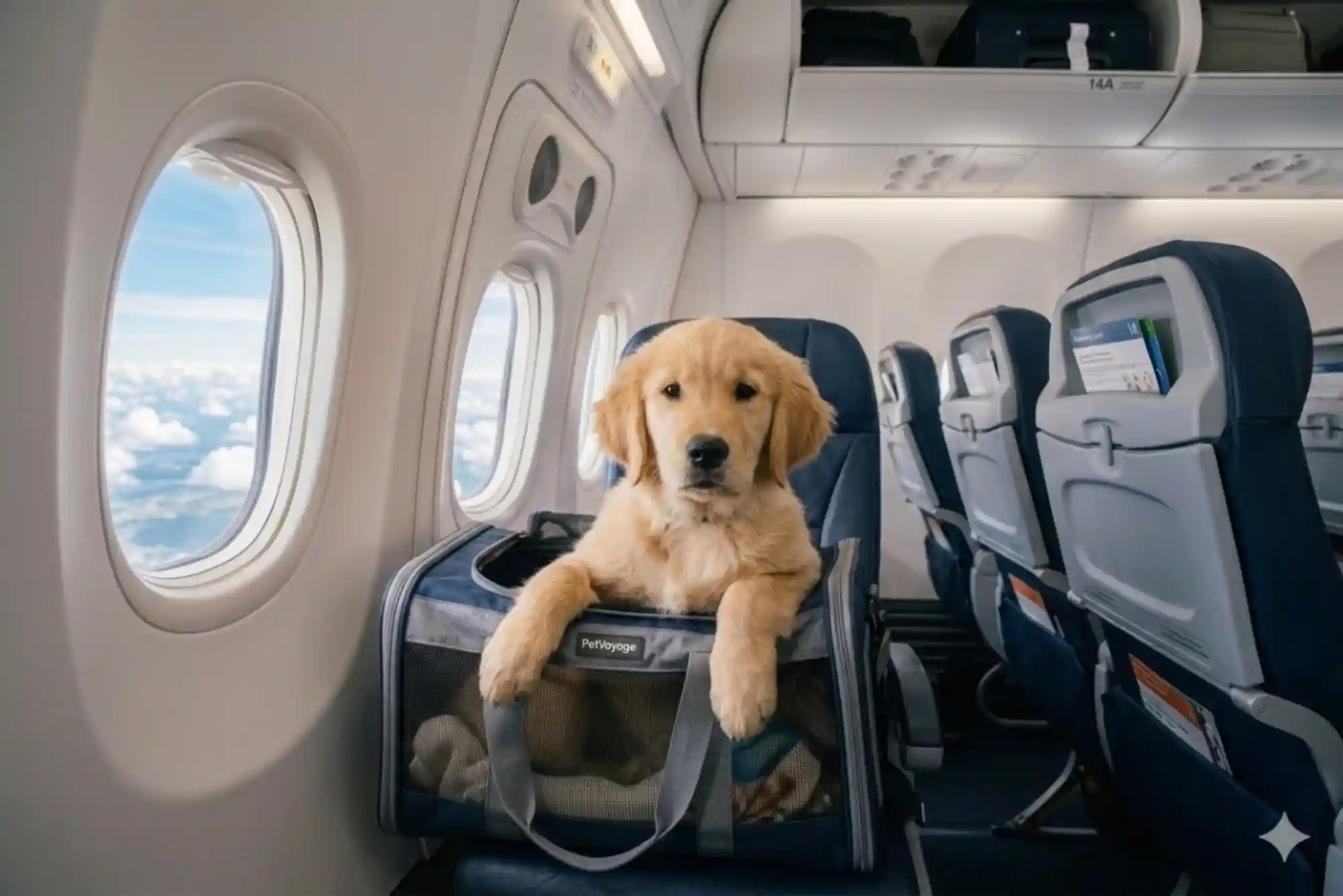
A suitable carrier is essential when Flying with a Dog in Cabin: Airline Weight Limits, Pet Crates, and Rules. The carrier must normally fit underneath the seat without blocking the aisle.
Soft-sided carriers are popular because they can fit more easily beneath certain seats. However, they must still provide enough structure and ventilation.
Hard-sided carriers may also be accepted on some flights. Their dimensions must match the available under-seat space.
Choosing the Right Carrier Size
Measure your dog while standing and resting. Consider the dog’s natural posture rather than forcing it into a smaller position.
The carrier should provide adequate ventilation on multiple sides. It should also have a secure closure that prevents accidental escape.
An absorbent lining can help manage unexpected accidents. However, avoid adding bulky items that reduce your dog’s available space.
A familiar blanket may provide comfort, but check whether it affects the carrier’s fit. Simple preparation can make the journey more comfortable.
Under-Seat Dimensions Are Important
Different aircraft can have different under-seat spaces. Even the same airline may use several aircraft types.
For this reason, the maximum carrier size may depend on your specific flight. Contact the airline if you are unsure about the available dimensions.
Do not rely only on a carrier labelled as “airline approved.” That description does not guarantee acceptance on every airline.
Booking a Cabin Flight for Your Dog
Pet spaces in the cabin are usually limited. Therefore, contact the airline soon after booking your own ticket.
Some airlines allow pet reservations online. Others require you to call customer service.
Ask for confirmation that your dog has been added to the booking. Keep any confirmation details available when travelling.
When comparing destinations and travel options, Tripmatchup can be a useful starting point for broader travel planning. Nevertheless, airline-specific pet rules should always be confirmed directly with the carrier.
Check Route-Specific Restrictions
A pet may be accepted on a domestic route but restricted on an international route. Some countries have strict import requirements.
Certain destinations may require vaccinations, identification records, health certificates, or advance permits. Processing these documents can take time.
In addition, transit countries may have their own rules. This is especially important when you have a long layover.
Health Certificates and Travel Documents
Documentation is another important part of Flying with a Dog in Cabin: Airline Weight Limits, Pet Crates, and Rules. The documents required depend on the airline and destination.
A veterinarian may need to examine your dog before travel. Some countries require certificates issued within a specific period before arrival.
Vaccination records are commonly requested for international travel. Rabies requirements can differ depending on where you are travelling from and where you are going.
Microchips and Identification
Many international destinations require dogs to have an approved microchip. The timing of microchip implantation and vaccination may also matter.
Make sure your dog’s identification details match the travel documents. Small errors can cause delays during inspection.
Your carrier should also display appropriate contact information. However, avoid placing unnecessary personal information where it can be easily lost or damaged.
Understanding Regulatory Requirements
Airline policies are not the only rules that matter. Aviation and government authorities also establish safety standards affecting animal travel.
Travellers flying within or involving the United States should review relevant information from FAA Pet Travel Regulations Official sources can help you understand general aviation guidance and related safety expectations.
Always remember that airline policies may impose additional requirements. The airline’s published rules remain important for your specific flight.
Preparing Your Dog Before the Flight
Good preparation can make Flying with a Dog in Cabin: Airline Weight Limits, Pet Crates, and Rules much easier to manage.
Introduce the carrier well before travel day. Allow your dog to spend calm periods inside it at home.
Place familiar and safe bedding inside the carrier. Encourage your dog with positive experiences rather than forcing confinement.
Practise Short Carrier Sessions
Start with short periods and gradually increase the duration. This can help your dog become more comfortable.
You can also carry the bag around your home or take short trips. These experiences may help your pet adjust to movement.
Avoid making the carrier associated only with stressful events. Calm training is generally more effective.
Feeding and Water Before Departure
Ask your veterinarian for advice based on your dog’s age and health. Every pet has different needs.
Avoid making sudden changes to your dog’s routine before travel. Familiar food and normal routines can reduce unnecessary stress.
Provide water appropriately, especially during a long travel day. However, follow airport security rules regarding liquids and containers.
What Happens at Airport Security?
Airport security procedures can be unfamiliar for pet owners. You may need to remove your dog from the carrier during screening.
The empty carrier may then pass through screening equipment. Your dog may be carried or handled according to security instructions.
Use a secure harness and leash before removing your pet. Airports contain unfamiliar sounds, crowds, and movement.
Arrive Earlier Than Usual
Travelling with a pet often takes extra time. You may need to visit the airline counter for document checks.
Arriving early reduces pressure and allows time for unexpected questions. However, avoid arriving excessively early if your dog becomes uncomfortable.
Check the airline’s recommended arrival time before departure.
Behaviour Rules During the Flight
In most cases, your dog must remain inside the carrier throughout the flight. This includes periods when the aircraft is moving.
The carrier usually remains underneath the seat in front of you. You should not expect to place the carrier on an empty seat.
Your dog should be reasonably calm and manageable. Airlines may refuse transportation if an animal creates a significant safety concern.
Consider Your Dog’s Temperament
Not every dog enjoys air travel. A nervous dog may find unfamiliar environments overwhelming.
Consider your dog’s personality before booking a flight. Consult a veterinarian if you have concerns about your pet’s ability to travel.
Do not use sedatives without professional veterinary guidance. Medication can affect animals differently, particularly at altitude.
Common Mistakes Pet Owners Should Avoid
One common mistake is booking a flight before checking pet availability. A cabin pet space may already be fully reserved.
Another mistake is buying a carrier without checking the airline’s dimensions. A product marketed for air travel may still be unsuitable.
Some travellers also forget about return-flight requirements. The airline or destination rules may differ for the journey home.
Finally, never assume that information from an old blog remains current. Airline policies can change without much notice.
Frequently Asked Questions
Can I bring my dog on a plane in the cabin?
Yes, many airlines allow small dogs in the cabin. However, your dog must meet the airline’s size, carrier, and route requirements.
What is the maximum weight for a dog to fly in the cabin?
There is no universal maximum weight. Some airlines use a combined pet and carrier limit, while others focus on carrier size.
What size pet carrier fits under an airplane seat?
The correct size depends on the airline and aircraft. Always check your airline’s specific under-seat dimensions before travelling.
Does my dog need a health certificate to fly?
Some airlines and destinations require a health certificate. Requirements vary depending on the route and destination country.
Can I take my dog out of the carrier during the flight?
Usually, no. Most airlines require pets to remain inside their carrier during the flight and while moving through the cabin.
How early should I book a flight with a dog?
Book as early as possible. Airlines often limit the number of pets allowed in the cabin on each flight.
Conclusion
Flying with a dog requires more preparation than ordinary travel. Understanding Flying with a Dog in Cabin: Airline Weight Limits, Pet Crates, and Rules helps you avoid unnecessary problems.
Check your dog’s size, weight, carrier dimensions, documents, and airline reservation before departure. Then confirm all requirements shortly before your travel date.