The latest official fee structure for 2026 shows that the core study permit fee is CAN$150 per person. Many applicants also need to pay a biometrics fee of CAN$85, and Canada’s proof-of-funds requirement for most provinces outside Quebec is CAN$22,895 per year for one applicant, excluding tuition and transportation costs, for applications made on or after September 1, 2025.
Quick Answer: How Much Does a Canada Student Visa Cost in 2026?
The short answer is that a standard study permit application costs CAN$150, and if biometrics are required, most single applicants will pay an additional CAN$85. That means the most common starting total is CAN$235 before medical exams, document preparation, travel to a Visa Application Centre, and proof-of-funds requirements are considered.
| Cost Item | Official Amount | Notes |
|---|---|---|
| Study permit fee | CAN$150 | Main application fee per person |
| Biometrics fee | CAN$85 | For most individual applicants who need biometrics |
| Biometrics fee for families | Up to CAN$170 | Maximum family total when applying together |
| Proof of funds for 1 applicant | CAN$22,895 | Outside Quebec, excludes tuition and transportation, for applications on or after Sept. 1, 2025 |
Main Canada Student Visa Fees in 2026
The central fee is the study permit application fee, which IRCC lists at CAN$150 per person. This is the core payment tied to the permit itself and applies whether you are applying for the first time or extending your study permit, although extension-related situations can involve other charges depending on your status. For a new student applying from outside Canada, the CAN$150 fee is the main starting point.
Biometrics are another major official charge. Canada’s biometrics page lists the fee as CAN$85 for an individual applicant and up to CAN$170 for a family applying at the same time. Since many students apply alone, the usual assumption for budgeting is CAN$85 unless you know you are exempt or part of a qualifying family application.
One useful detail that many applicants miss is that students applying from outside Canada usually do not have to pay a separate visitor visa or eTA fee when the study permit is approved. IRCC’s study permit guide and application instructions say that if you need a TRV or eTA, it is issued automatically with the study permit process and you do not need to pay additional fees for it separately in that initial outside-Canada application.
Detailed Cost Breakdown Beyond the Application Fee
The official fee is only part of the total cost. Canada also requires many students to prove they can financially support themselves while studying. For most provinces and territories outside Quebec, the official proof-of-funds page now shows CAN$22,895 for one applicant for one year of living expenses, excluding tuition and transportation, for applications submitted on or after September 1, 2025. For two family members, the amount rises to CAN$28,502, and for three, to CAN$35,040.
That proof-of-funds amount is not a fee paid to IRCC, but it is still one of the biggest financial requirements tied to the application. Students sometimes confuse “visa price” with “application charge only,” but in practice, the total financial barrier includes both the official government fees and the money you must show you have available. Tuition is also separate from this amount, which means your overall study budget can be much higher than the visa fee alone.
| Expense Type | Status | What to Know |
|---|---|---|
| Study permit fee | Fixed official fee | CAN$150 per person |
| Biometrics fee | Fixed official fee | Usually CAN$85 for one applicant |
| Proof of funds | Mandatory financial requirement | CAN$22,895 for one applicant outside Quebec, excluding tuition and transportation |
| Medical exam | Variable extra cost | Paid directly to panel physician; amount varies |
| Travel to VAC / biometrics centre | Variable extra cost | Depends on your city and country |
| Document preparation | Variable extra cost | May include translations, notarization, scans, and courier costs |
Do You Need to Pay for Medical Exams?
Medical exams are not charged by IRCC at a universal fixed price, but they can still add a meaningful amount to the total cost of getting a student visa. Canada says you need a medical exam to study in Canada if you will be in Canada for more than 6 months and at least one of several conditions applies, such as coming from a designated country or territory, being a medical student, or planning to work in fields that bring you into close contact with children or the elderly.
IRCC also states that you must pay all fees related to the medical exam directly at the appointment, including the doctor’s fee, radiology charges, special tests, treatment, or specialist visits if needed. The government does not set one flat worldwide exam fee on that page, so applicants should treat medical costs as a variable item that depends on the panel physician and country.
Required Documents That Affect the Total Cost
A student visa application is not only about paying the government fee. Canada’s study permit document pages say you need a letter of acceptance, and in most cases you also need a provincial or territorial attestation letter, often called a PAL or TAL, when you apply. That PAL or TAL confirms that you were assigned one of the available spaces to study in that province or territory. Most applicants must submit it with their application rather than later.
There are limited exceptions. Canada announced that starting January 1, 2026, master’s and doctoral students enrolled at a public designated learning institution do not need to submit a PAL or TAL. That is a major difference for some graduate applicants and may slightly reduce paperwork and timing pressure, though it does not change the government application fee itself.
| Document / Requirement | Usually Needed? | Cost Impact |
|---|---|---|
| Letter of acceptance | Yes | May involve tuition deposit depending on school policy |
| PAL / TAL | Usually yes | Can affect timing; often linked to accepting your offer and sometimes tuition payment |
| Proof of funds | Yes | Major financial requirement |
| Medical exam | In some cases | Paid separately to panel physician |
| Biometrics | In many cases | Official CAN$85 fee for an individual |
How the Canada Student Visa Process Works
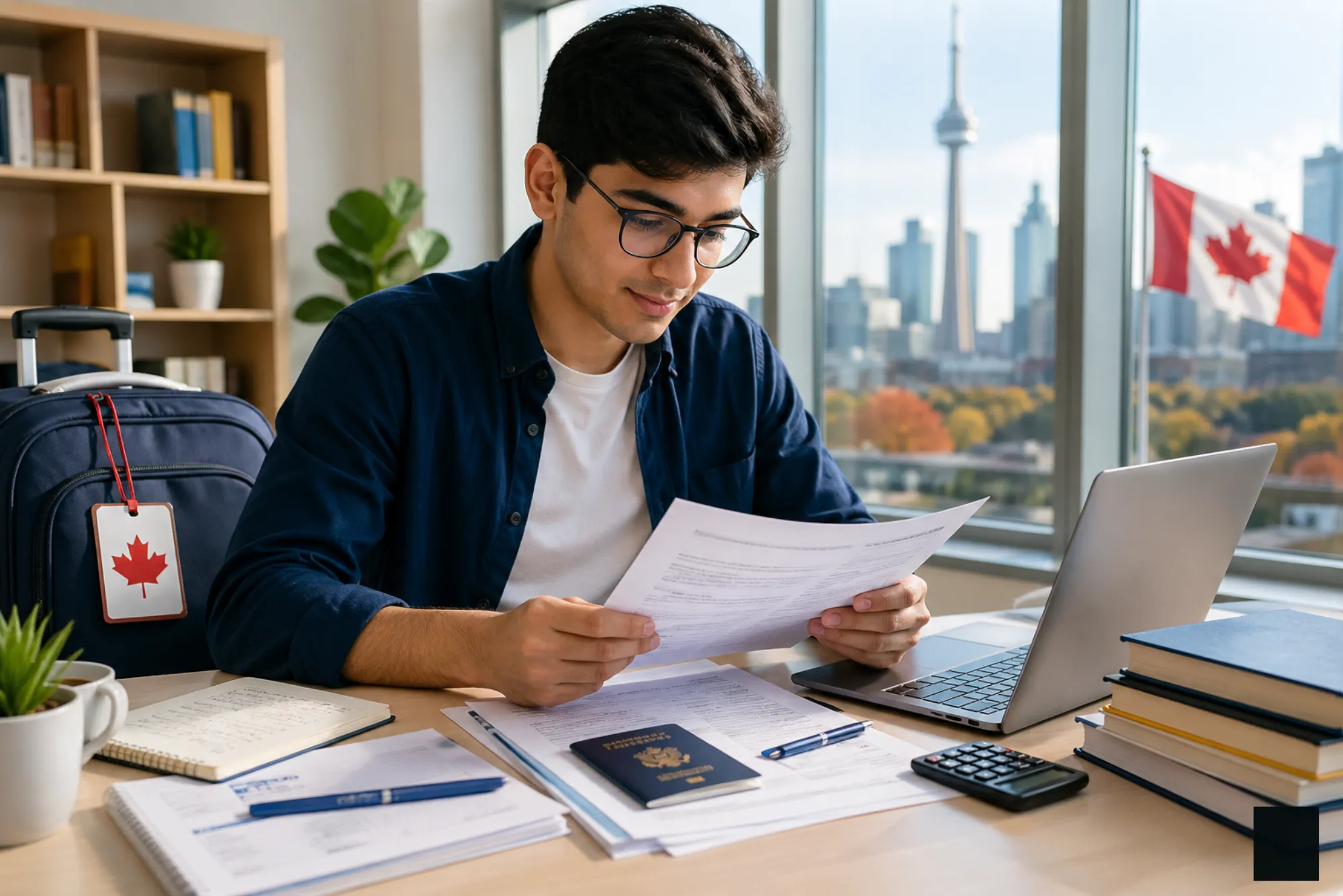
The process is straightforward on paper, but small mistakes can make it expensive. You need to choose a designated learning institution, secure admission, gather your documents, show proof of funds, pay the official fee, and submit the application online or through the accepted route for your country. After that, IRCC reviews the application, and you may be asked for biometrics, a medical exam, or additional documents.
- Get admission from a designated learning institution.
- Obtain your PAL or TAL if your case requires one.
- Prepare proof of funds, passport, and supporting documents.
- Pay the CAN$150 study permit fee and biometrics fee if required.
- Submit the study permit application.
- Complete biometrics and medical exam steps if instructed.
- Wait for a decision and receive your port of entry letter of introduction if approved.
Students preparing for a long move can also browse useful travel and planning tips while organizing their study paperwork, because the visa process goes more smoothly when the rest of your travel planning is equally structured.
What Is the Real Total Cost for a Typical Applicant?
For a typical single applicant outside Quebec, the most basic official and predictable starting amount is CAN$235, which combines the CAN$150 study permit fee and the CAN$85 biometrics fee. But that figure does not include medical exams, document handling, travel to the VAC, tuition deposits, or the proof-of-funds requirement.
A more realistic way to think about the total cost is to separate it into three layers. First, there are fixed government charges. Second, there are variable application-support costs such as medicals and document handling. Third, there is the financial-capacity requirement, especially the CAN$22,895 living-expense benchmark outside Quebec for one applicant, plus tuition and transportation. That is why the “student visa price” is much bigger in practical terms than the processing fee alone.
Students who want to keep planning beyond the paperwork stage can also explore Canada destination guides to start understanding where they may live, study, and budget after arrival.
Frequently Asked Questions
How much is the Canada student visa fee in 2026?
The official study permit fee is CAN$150 per person. If biometrics are required, most single applicants also pay CAN$85, bringing the common starting total to CAN$235.
Do I need to pay separately for a visitor visa or eTA with a study permit?
For an initial study permit application from outside Canada, IRCC says a TRV or eTA is issued automatically if needed, and you do not need to submit a separate application or pay an extra fee for it.
How much money do I need to show for living expenses?
For applications made on or after September 1, 2025, the official amount for one applicant outside Quebec is CAN$22,895 for one year, excluding tuition and transportation costs.
Do all students need a PAL or TAL?
No. Most applicants need one, but some are exempt. Canada says that as of January 1, 2026, eligible master’s and doctoral students at public designated learning institutions do not need to submit a PAL or TAL.
Is the medical exam fee fixed by the government?
No universal flat amount is listed by IRCC on the medical-exam pages. Canada says you must pay the doctor or radiologist, plus any special tests or specialists needed, which means the total varies by provider and location.
Conclusion
Student visa price for Canada in 2026 starts with a clear official base: CAN$150 for the study permit and, in many cases, CAN$85 for biometrics. Beyond that, the real cost rises because students may also need proof of funds at the updated CAN$22,895 level outside Quebec, a PAL or TAL in most cases, a medical exam in certain situations, and extra document or travel expenses.
The smartest way to budget is to treat the application fee as only the beginning. Once you combine the official charges, supporting requirements, and real travel costs, you get a more accurate picture of what studying in Canada actually costs in 2026. Students comparing broader budget topics can also check pricing-related travel content while building their overall plan.